14Apr 2026
table of contents
Construction and excavation projects rely on the right machinery to get the job done efficiently and safely. Among the most commonly used machines are skid steers and backhoe loaders.
At first glance, the compact agility of a skid steer loader and the dual-purpose versatility of a backhoe loader can make choosing between them confusing. While they may appear similar, both machines can dig, lift, move materials, and support a wide range of attachments, yet their performance, operating environments, and productivity advantages differ significantly. Selecting the wrong machine can reduce efficiency, increase operating costs, and limit capabilities on the job.
This article explains the key differences between skid steer s and backhoe loaders, including their design, features, strengths, limitations, and ideal applications. Whether you are a contractor planning your next project, an equipment buyer comparing options, or new to heavy machinery, this guide will help you confidently choose the right equipment. As a professional manufacturer, BISON is committed to helping customers understand their options and providing reliable, high-performance loaders designed to maximize productivity across a wide range of industries.
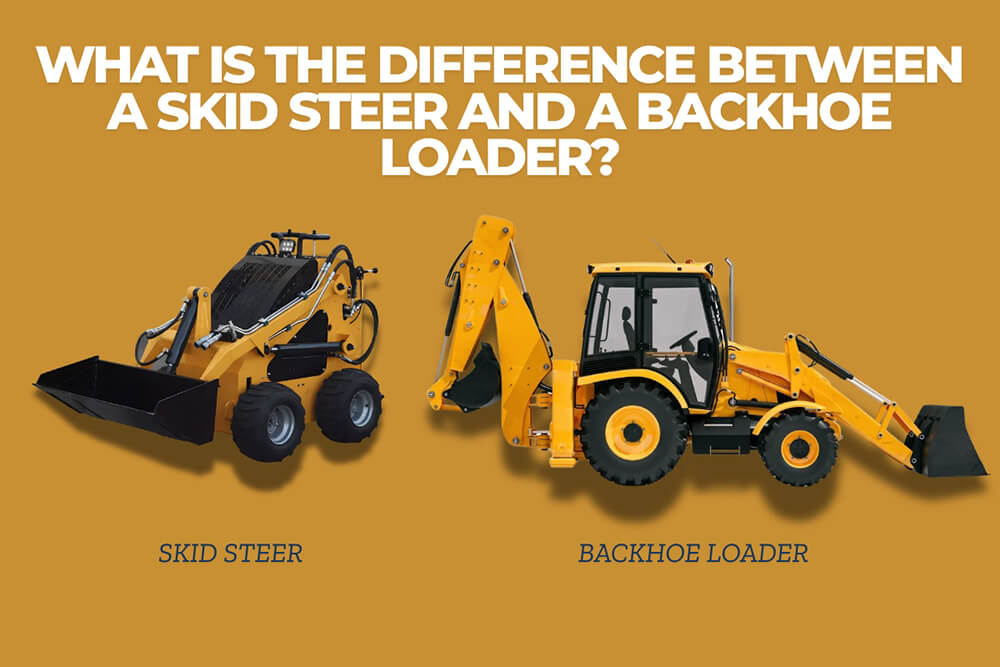
Skid steer loaders are compact, versatile machines widely used in construction, landscaping, agriculture, and property maintenance. Their small size and exceptional maneuverability allow them to operate efficiently in confined areas where larger equipment would struggle. With a range of front-mounted attachments, skid steers can perform multiple tasks, making them a true multi-purpose machine.
Unique steering system (zero-turn capability): A skid steer loader's wheels or tracks on each side operate independently, allowing the machine to pivot in place. This zero-turn capability gives it exceptional agility, ideal for tight job sites, narrow pathways, and indoor work.
Compact size and small footprint: Designed to be lightweight and compact, skid steer loaders can access urban construction zones, residential properties, warehouses, and interior demolition sites. Despite their size, they deliver impressive lifting and pushing power.
Front-facing attachments with wide compatibility: Skid steer loaders have lift arms on either side of the operator that extend forward, supporting a wide range of attachments, including: buckets, pallet forks, augers, trenchers, brush cutters, snow blades and blowers, sweepers, breakers, grapples and specialized buckets. This versatility allows one machine to perform multiple tasks efficiently.
Forward-facing operator station: Operators sit facing forward, providing excellent visibility of attachments and the work area. This orientation enhances precision during loading, grading, and material handling, especially in confined spaces.
Skid steer loaders are ideal for tasks that require precision and flexibility, such as:
Loading and transporting materials
Landscaping and grading
Excavation and trenching (with attachments)
Demolition work
Snow removal
Agricultural operations
Warehouse and facility maintenance
Site cleanup
Compact and agile: Easily navigates tight spaces and confined areas.
Excellent maneuverability: Zero-turn steering allows operation in restricted spaces.
Ideal for confined environments: Perfect for urban, residential, and indoor applications.
Highly versatile: Supports a wide range of attachments for different tasks.
User-friendly operation: Simple controls allow operators with limited experience to use them effectively.
Compact and transportable: Easy to move between job sites using a standard trailer.
Lower operating costs: Consumes less fuel and requires less maintenance than larger machines.
Limited digging depth: Not suitable for deep digging compared to machines with dedicated excavator arms.
Low lifting capacity: Cannot handle extremely heavy loads like larger loaders or backhoe loaders.
Stability concerns on rough terrain: Wheeled models may struggle on uneven or muddy ground (tracked versions help mitigate this).
Primarily front-focused functionality: All major operations occur from the front, limiting simultaneous multi-function capability.
Their ability to switch attachments quickly and maneuver in tight spaces makes them especially valuable for contractors handling multiple tasks on a single project.
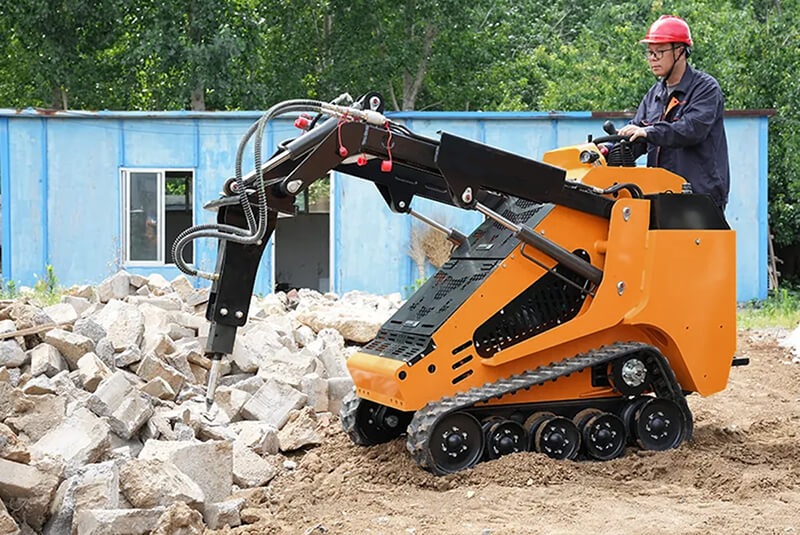
Backhoe loaders are versatile machines built on a tractor-style chassis, featuring a front loader bucket and a rear backhoe arm. This dual configuration allows them to handle both digging and material-handling tasks efficiently. Widely used in construction, roadwork, utilities, and agriculture, backhoe loaders are ideal for medium to large-scale projects where power, digging capacity, and efficiency are essential.
Dual-purpose design (loader + excavator functionality): The front loader bucket lifts, carries, pushes, and loads materials such as soil, gravel, and debris, while the rear backhoe arm digs trenches, foundations, and holes with precision. This combination allows operators to switch seamlessly between loading and digging tasks without changing machines, improving job site efficiency.
Swiveling operator seat: The operator seat can rotate between forward-facing and rear-facing positions. Facing forward, the operator controls the front loader; rotated backward, they control the backhoe arm. This ergonomic design ensures safe and precise operation while transitioning between tasks.
Larger size and stronger digging force: Backhoe loaders are heavier and more powerful than skid steer loaders. Their longer wheelbase and robust hydraulic systems provide greater digging depth, lifting capacity, and breakout force, making them suitable for demanding excavation and heavy material handling.
Automotive-style steering and wider turning radius: Using a steering wheel and front-wheel steering system, backhoe loaders are easier to operate for users familiar with standard vehicles. However, this results in a wider turning radius, making them less maneuverable in tight spaces compared to skid steer loaders.
Backhoe loaders excel in tasks that require both excavation and loading, including:
Excavating trenches for utilities (water, gas, electrical lines)
Digging foundations and footings
Road construction and repair
Loading and transporting heavy materials
Agricultural tasks, such as digging irrigation channels
Site preparation and land clearing
Large-scale landscaping
Infrastructure and municipal projects
Their dual functionality makes them indispensable on medium to large job sites, providing both flexibility and power.
Two machines in one: Combines loader and excavator capabilities, reducing the need for multiple machines.
Strong digging performance: Greater digging depth and breakout force than compact loaders.
High lifting capacity: Handles heavier materials and can move large loads effectively.
Versatility on larger job sites: Effective for a wide range of construction, infrastructure, and agricultural tasks.
Efficient for multi-step operations: Operators can dig and load without switching equipment.
Stable design: Four wheels with a wide wheelbase provide stability during digging.
Larger size: Requires more space to operate and transport; less maneuverable in tight areas.
Reduced maneuverability: Wider turning radius makes it unsuitable for confined spaces; cannot pivot in place like skid steer loaders.
Higher purchase and operating costs: More expensive than smaller machines, with higher fuel consumption and maintenance needs.
Attachment flexibility is limited: Switching tools is slower and less adaptable compared to skid steer loaders.
The backhoe loader is a powerful and versatile machine designed for projects that require both excavation and material handling. Its dual-purpose design, strong digging capability, and multi-role functionality make it an essential asset for construction crews, agricultural operations, and infrastructure development where productivity and capability are critical.
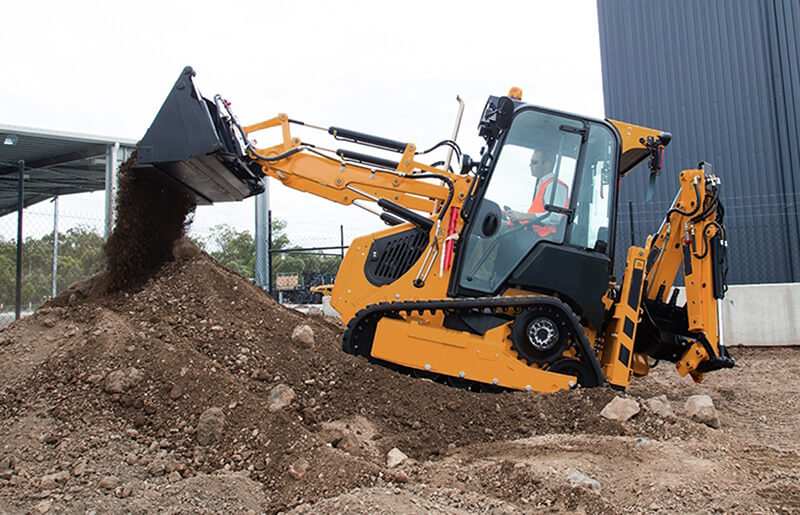
Let's take a look at the distinctions between slide steer loaders and backhoe loaders in terms of design, functionality, and performance etc, which will help contractors, landscape architects, and project managers choose the right machine to get the job done.
Skid steer loader: Compact, rigid-frame design with lift arms mounted along the sides. All tools and attachments connect at the front. Optimized for compactness, flexibility, and quick attachment changes.
Backhoe loader: Built on a larger tractor-style chassis with two permanent working components: a front loader bucket and a rear backhoe arm. Performs both loading and excavation without relying heavily on interchangeable attachments.
Key difference: Skid steer loaders are smaller, attachment-focused machines, while backhoe loaders are larger with built-in dual digging and loading capabilities.
Skid steer loader: Extremely compact, ideal for tight spaces, urban sites, and indoor projects. Uses differential steering, allowing it to pivot in place (zero-turn radius).
Backhoe loader: Larger and more stable, designed for open construction sites. Uses a steering wheel with front-wheel steering, requiring more space to maneuver.
Key difference: Skid steer loaders excel in confined areas, while backhoe loaders provide stability in open environments.
Skid steer loader: Limited digging depth; suitable for shallow excavation or trenching.
Backhoeloader: Rear arm allows deep trenching, foundation digging, and hole excavation.
Key difference: Backhoe loaders handle deeper and more demanding excavation tasks.
Skid steer loader: Best for lighter loads and short material movements.
Backhoe loader: Designed for heavy loads and can transport materials over longer distances.
Key difference: Backhoe loaders handle heavier loads, while skid steer loaders are optimized for smaller, more agile tasks.
Skid steer loader: Multi-purpose machine with quick attachment changes. Supports material handling, grading, light digging, snow removal, and more.
Backhoe loader: Primarily built for excavation and loading. Some attachment capability, but changes are slower and mainly for specialized purposes.
Key difference: Skid steer loaders offer greater attachment flexibility; backhoe loaders rely on their built-in loader and backhoe.
Skid steer loader: Operator faces forward and controls all attachments from a single seat. Requires repositioning for digging tasks.
Backhoe loader: Swiveling operator seat allows facing forward for loader tasks and backward for excavation. Improves efficiency and visibility.
Key difference: Skid steer loaders are optimized for forward-facing tasks; backhoe loaders provide ergonomic advantage for combined operations.
Skid steer loader: Lower initial cost, fuel consumption, and maintenance. Fewer complex hydraulic components; cost-effective for small to medium operations.
Backhoe loader: Higher purchase and operating costs due to larger engines and complex systems. Better value for heavy-duty, multi-role projects.
Key difference: Skid steer loaders are economical and cost-efficient; backhoe loaders require higher investment but offer superior heavy-duty performance.
Skid steer loader: Performs well on firm surfaces and in confined spaces but can struggle on soft or uneven terrain.
Backhoe loader: More stable on uneven or soft ground, capable of heavy lifting and digging without tipping.
Key difference: Skid steer loaders excel in tight, firm areas; backhoe loaders handle heavy-duty work on varied terrains.
| Skid steer loader | Backhoe Loader |
| Compact, rigid-frame design with lift arms mounted along the sides; all tools connect at the front. | Built on a larger tractor-style chassis with permanent front loader and rear backhoe arm. |
| Extremely compact; uses differential steering to pivot in place (zero-turn radius). | Larger and more stable; uses a steering wheel with front-wheel steering. |
| Limited digging depth; suitable for shallow excavation or trenching. | Rear arm allows deep trenching, foundation digging, and hole excavation. |
| Suited for lighter loads and short material movements. | Designed for heavy loads and can transport materials over longer distances. |
| Multi-purpose machine with quick attachment changes for grading, snow removal, etc. | Primarily built for excavation and loading; attachment changes are slower and specialized. |
| Operator faces forward and controls all attachments from a single seat. | Swiveling operator seat allows facing forward for loader tasks and backward for excavation. |
| Lower initial purchase cost, fuel consumption, and maintenance. | Higher purchase and operating costs due to larger engines and complex systems. |
| Performs exceptionally well on firm surfaces but can struggle on soft or uneven terrain. | More stable on uneven or soft ground; handles heavy lifting without tipping. |
Comparison table of skid steer loaders and backhoe loaders
Selecting between a skid steer and a backhoe loader depends on the project's specific needs, site conditions, task types, and budget. Evaluating these factors ensures the right machine is chosen for maximum efficiency, safety, and productivity.
Minor-scale or precision work: Skid steer loaders are ideal for small material handling.
Medium- to large-scale excavation and loading: Backhoe loaders are better for projects requiring deep digging, heavy lifting, and significant material movement.
Tip: Determine the scale, type, and frequency of tasks — whether your work requires light, flexible operations or heavy-duty excavation and loading.
Confined or urban areas: Skid steer loaders excel in tight spaces, narrow pathways, and indoor projects.
Open construction sites or rough terrain: Backhoe loaders provide stability and power on larger sites, soft ground, or slopes, making them ideal for heavy-duty excavation.
Tip: Consider space constraints — skid steer loaders are best for compact areas, while backhoe loaders perform best in open or moderately sized sites.
Multiple attachments and varied tasks: Skid steer loaders offer versatility for landscaping, site cleanup, snow removal, and light excavation.
Digging, trenching, and heavy loading: Backhoe loaders are designed for excavation, moving large volumes of soil, and supporting construction projects that require both digging and material handling.
Tip: Determine if your work is attachment-driven (grading, snow removal, landscaping) or excavation-focused (trenching, foundations).
Skid steer loaders: Lower purchase price, reduced fuel consumption, and easier maintenance.
Backhoe loaders: Higher initial investment and operating costs, but greater power, deeper digging, and higher lifting capacity make them cost-effective for large-scale or multi-task projects.
Tip: Balance upfront costs with long-term value for your project's scale and requirements.
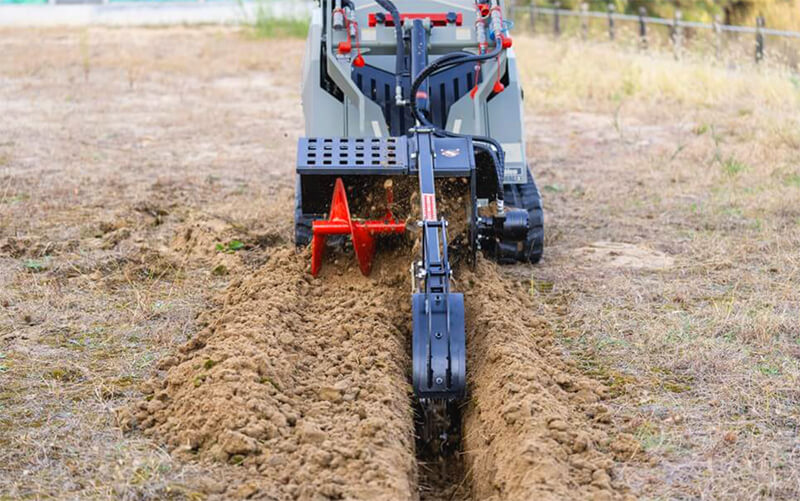
Operating heavy machinery such as skid steer loaders and backhoe loaders requires strict attention to safety. Each machine's design and functionality affect how operators approach tasks, maintain stability, and prevent accidents on the job site.
Skid steer loaders are compact and highly maneuverable, but their small size and axle capacity can create unique hazards. Key safety practices include:
Use a Roll-Over Protective Structure (ROPS): Always ensure the ROPS is in place and the seat belt is fastened to protect against rollover.
Watch for tipping hazards: Avoid tipping when operating on uneven terrain, lifting very heavy loads, or turning at high speeds.
Maintain clear visibility: Ensure visibility of attachments and surroundings to prevent collisions.
Proper attachment handling: Verify that attachments are securely fastened and in good working condition before use.
Backhoe loaders are larger and more stable, but they present their own safety challenges, especially during digging and heavy lifting. Important safety measures include:
Stabilize the machine: Deploy stabilizer legs before operating the backhoe arm to prevent tipping.
Be aware of overhead obstacles: Avoid power lines and other overhead hazards when extending the backhoe arm.
Proper signaling: Use clear communication or signalers when working near other workers.
Load awareness: Avoid overloading the front bucket or lifting uneven loads, which can destabilize the machine.
Regular inspection: Check tires, hydraulic systems, and attachments before each operation.
Operator education: Ensure operators are trained and familiar with the equipment's controls and safety procedures.
Clear the work area: Keep bystanders at a safe distance and remove hazards from the site.
Follow manufacturer guidelines: Adhere to recommended operating speeds, lifting capacities, and maintenance schedules.
Regular maintenance is essential for skid steers and backhoe loaders to operate efficiently and safely. Proper upkeep extends machine life, reduces downtime and repair costs, and minimizes on-site safety risks.
Skid steer loaders are compact and versatile, but their small size and maneuverability require frequent checks:
Daily inspection: Check tires or tracks for wear, inspect hydraulic hoses for leaks, and ensure attachments are secure.
Engine maintenance: Monitor oil, coolant, and air filters regularly; replace fluids and filters as recommended by the manufacturer.
Undercarriage cleaning: Remove dirt, mud, and debris to prevent damage and ensure smooth operation.
Attachment maintenance: Inspect buckets, grapples, and other attachments for cracks or excessive wear.
Benefit: Continuous maintenance keeps the skid steer loader agile, reliable, and ready for a variety of tasks.
Backhoe loaders are larger and more powerful, requiring careful attention to maintain performance during heavy-duty operations:
Hydraulic system check: Inspect hoses, cylinders, and fluid levels to prevent leaks and maintain digging performance.
Tire and wheelbase inspection: Monitor tires for wear and proper inflation to support heavy loads and stability.
Engine maintenance: Keep oil, coolant, and fuel filters in top condition to prevent breakdowns.
Attachment maintenance: Check backhoe and loader buckets, and other attachments for wear, cracks, or loose connections.
Benefit: Proper maintenance ensures backhoe loaders perform heavy digging, lifting, and material transport effectively while reducing downtime.
Follow manufacturer guidelines: Adhere to the recommended maintenance schedule.
Keep detailed records: Document inspections, repairs, and services to track machine health over time.
Fix minor problems promptly: Address leaks, cracks, or wear early to prevent major failures.
Use quality parts and fluids: Genuine or high-quality replacement components ensure optimal performance and longevity
Skid steers and backhoe loaders each have unique strengths tailored to different construction, landscaping, and excavation needs. Neither machine is universally "better"; the right choice depends on project size, site conditions, type of work, and budget etc. Selecting the appropriate equipment ensures maximum efficiency, safety, and productivity.
As a professional loader manufacturer, BISON is committed to delivering high-quality, reliable machines designed to meet diverse operational needs. Evaluate your project requirements, consider the strengths of each machine, and choose the loader that will maximize efficiency and performance on your job site. Your next project deserves the right machine — make your decision with confidence.
inquiry form here
BISON BLOG, All the latest news and views from Bison Machinery.
what's hot?
Related Articles
how to choose the right asphalt roller for a paving project how to choose a road roller size what is the difference between a skid steer and a backhoe loader difference between graders and road rollers everything you should know about soil compactorsRelated Products