17Mar 2026
table of contents
The stability of every road, building, and runway depends on one essential process: soil compaction. Although it often goes unnoticed, proper soil compaction is critical in construction because it helps structures remain strong, safe, and able to support heavy loads. Soil compactors are specialized machines designed to increase soil density by applying controlled pressure, vibration, or a combination of both. By compacting loose soil, these machines reduce air gaps, limit future settlement, and create a solid, reliable foundation for construction projects of all sizes.
In this article, BISON, a professional soil compactor manufacturer in China, will explain what factors affect compaction quality, introduces the main types of soil compactors, explores their key applications and benefits, and highlights important factors to consider when choosing the right equipment for your project.
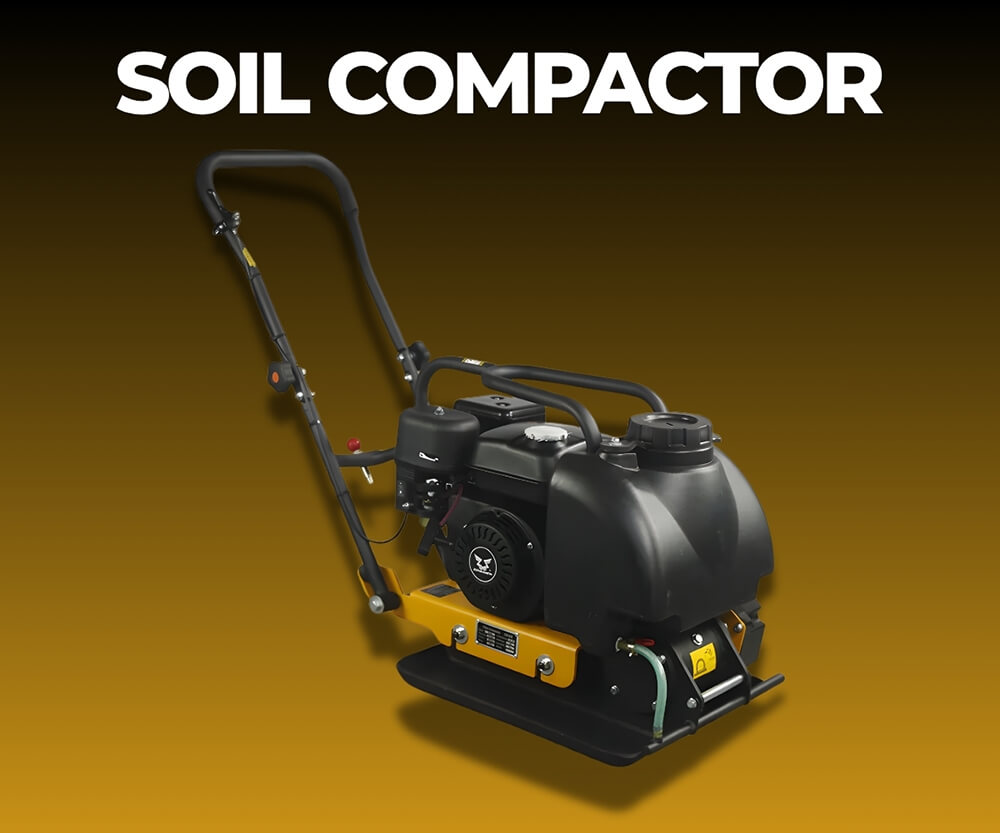
The quality of soil compaction depends on several important factors. Understanding these factors helps ensure a strong and stable foundation for construction projects.
Different soils respond differently to compaction due to variations in particle size and structure.
Cohesive soils: Such as clay, these contain fine particles that stick together. They require strong kneading action and are best compacted using rammers or padfoot rollers.
Granular soils: Such as sand or gravel, these consist of larger, loose particles. They compact best through vibration, making vibratory plate compactors or smooth drum rollers more effective.
Well-graded granular soils: These contain a mix of particle sizes and are ideal for construction. Their particles interlock easily, reducing voids, resisting moisture penetration, and supporting heavier loads.
Poorly graded soils: With particles of similar size, these lack interlocking strength and are less suitable for load-bearing applications.
Example: Trying to compact clay with a smooth plate compactor is like trying to flatten sticky dough with a comb — it is inefficient and ineffective.
Water content plays a critical role in soil compaction. Each soil type has an optimum moisture content (omc) at which it compacts most effectively.
Too dry: Soil particles cannot bind together, leaving the material loose and weak.
Too wet: Excess water fills the voids, causing the soil to become unstable and lose strength under load.
Example: Building a sandcastle works best with slightly damp sand. Dry sand falls apart, while overly wet sand collapses under its own weight.
The amount of force applied and the thickness of each soil layer (lift) significantly affect compaction quality.
Force and thickness: Insufficient force or compacting layers that are too thick can leave air pockets and weak zones.
Proper technique: Proper compaction is achieved by working in thin layers and fully compacting each lift before adding the next.
Example: Like building a layered cake, each layer must be pressed firmly before stacking another. Skipping steps or applying uneven pressure leads to collapse.
Soil compaction is a critical construction process that increases the load-bearing capacity and stiffness of natural or chemically modified soils. By forcing soil particles closer together, compaction improves particle interlocking, increases friction, and enhances the soil's shear strength.
Without proper compaction, loose soil can shift, settle, absorb water, or erode over time. These movements may lead to cracked foundations, damaged pavements, leaking underground pipes, and even structural failure. This is why soil compaction is essential for roads, buildings, runways, and other load-bearing structures.
Increased bearing capacity: Compacted soil can support significantly heavier loads. Similar to tightly packing sand in a container, dense soil resists sinking and deformation, allowing it to safely carry the weight of buildings, roads, and heavy equipment.
Improved durability and stability: Compaction increases soil stiffness and resistance to deformation. This helps prevent long-term ground movement that can weaken structures or cause surface damage.
Reduced settlement and volume change: Removing air voids minimizes soil shrinkage and expansion caused by moisture changes. This is especially important for pavements, where swelling or shrinking can lead to cracking and premature failure.
Lower permeability and better water control: Compacted soil has fewer voids, making it harder for water to pass through. Reduced water infiltration protects foundations from weakening, limits erosion, and helps prevent frost damage in cold climates.
Prevention of soil erosion: Loose soil is easily displaced by wind and rain. Compacted soil stays in place, maintaining ground integrity and protecting both the structure and surrounding environment.
Regardless of soil type, failing to remove air between particles before construction can lead to unexpected settlement, water infiltration, and structural damage.
Achieving effective soil compaction requires quality compaction equipment suited to the soil type and job conditions. Using the right machines ensures consistent density, long-term stability, and helps prevent costly repairs or failures in the future.
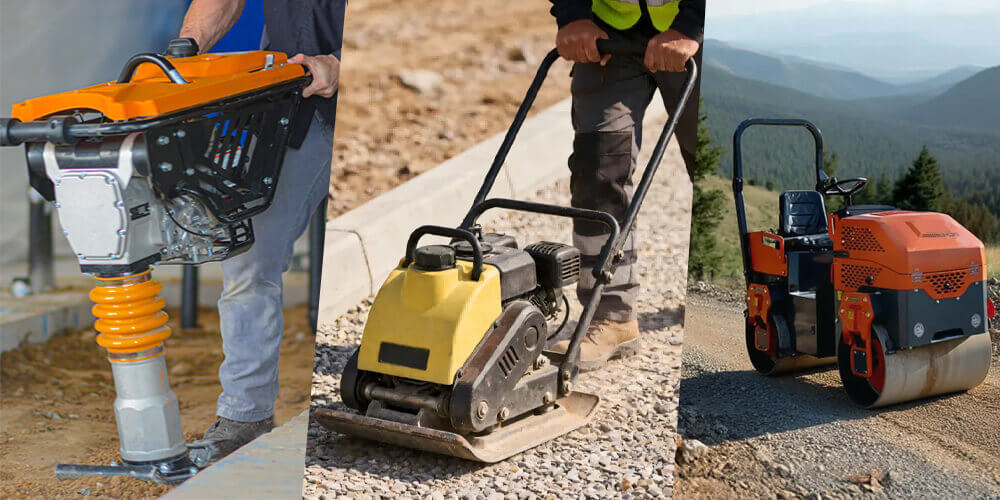
Soil compactors are available in several types, each designed to match specific soil conditions and project requirements. Choosing the right compactor is essential for achieving strong, stable ground. BISON offers a complete range of soil compactors to meet the needs of different construction applications.
Walk-behind compactors are compact machines operated from behind, making them ideal for confined spaces and smaller-scale jobs.
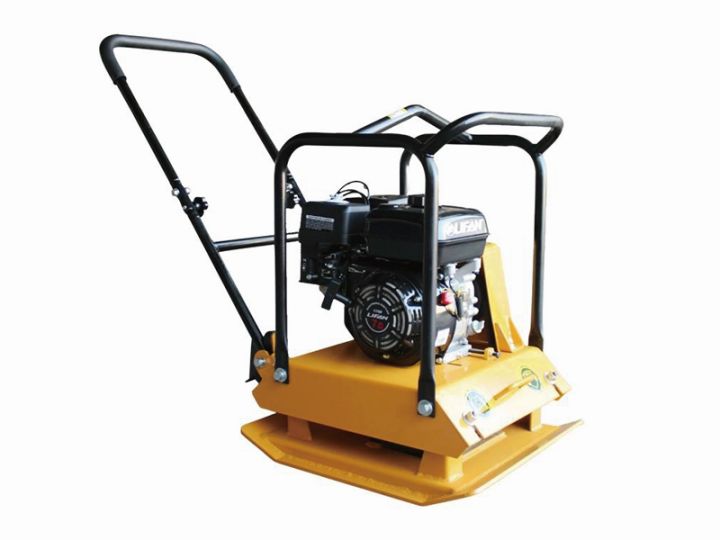
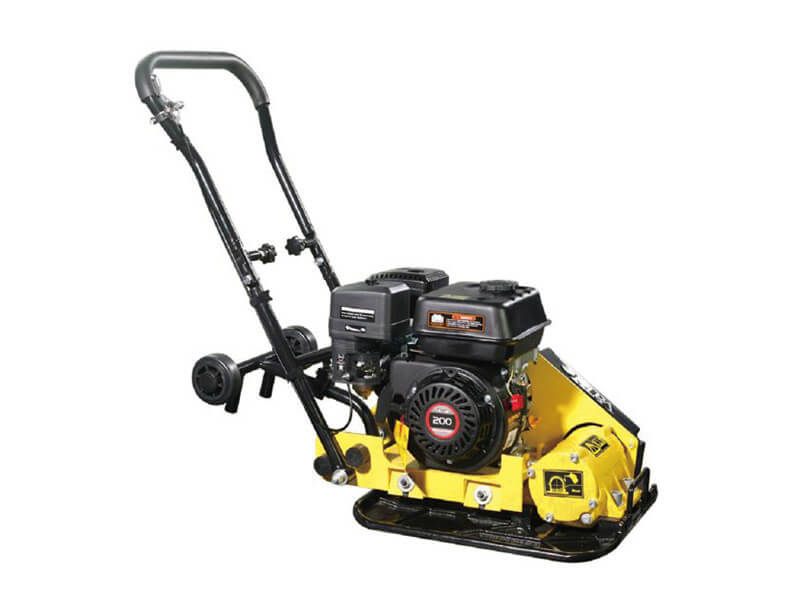
Vibratory plate compactors: These use high-frequency vibration to compact granular soils such as sand and gravel. They are commonly used for sidewalks, driveways, landscaping, and small soil patches.
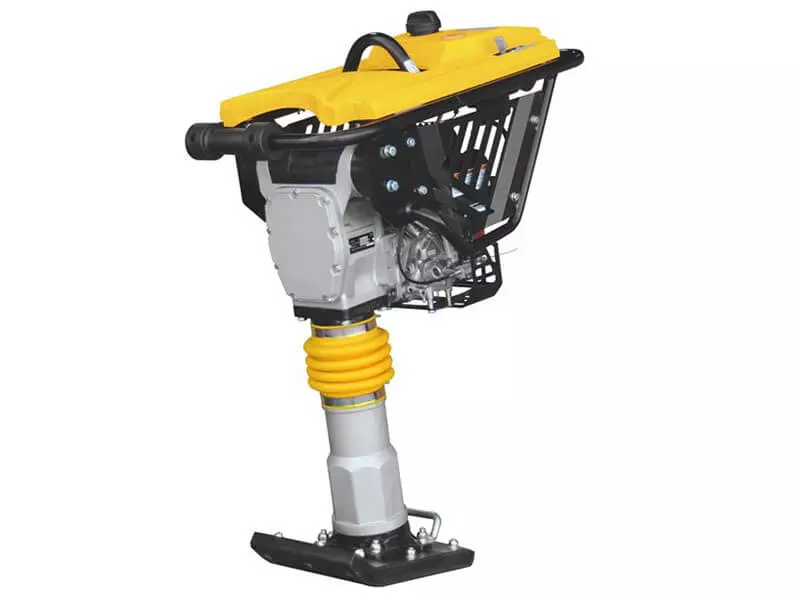
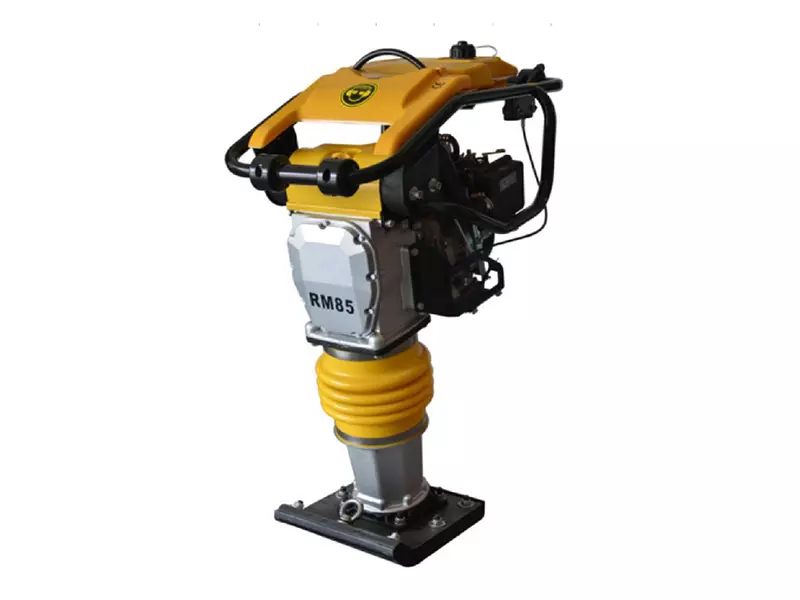
Tamping rammers (jumping jacks): These deliver powerful vertical impact force, making them highly effective for cohesive soils like clay, especially in trenches and narrow areas.
Advantages: Walk-behind compactors are lightweight, easy to maneuver, and provide precise compaction where larger machines cannot operate.
Ride-on compactors are larger machines with seated operators, designed for medium to large construction projects.
Smooth drum road rollers: These are ideal for asphalt and granular soils, providing uniform compaction for roads, parking lots, and airport runways.
Padfoot rollers: These feature raised pads on the drum that knead and compact cohesive soils such as clay and silt.
Pneumatic tire rollers: These use multiple rubber tires to apply kneading pressure, improving density while delivering a smooth surface finish and sealing small voids.
Advantages: Ride-on compactors cover large areas efficiently and deliver deeper, more consistent compaction, making them suitable for highways, industrial sites, and large foundations.
Certain projects require compactors designed for unique conditions or materials. Examples include trench compactors for deep, narrow excavations and landfill compactors for heavy, mixed waste materials. These machines are engineered to maximize performance in specific environments.
| Soil compactor types | Feature |
| Walk-behind compactors | Best for small areas and precision work. |
| Ride-on compactors | Excel in large-scale projects requiring high productivity and uniform density. |
| Specialized compactors | Address challenging applications beyond the capability of standard machines. |
Understanding the key features of soil compactors helps ensure efficient, safe, and long-lasting compaction results. Selecting the right machine depends on matching its capabilities to your project conditions.
Compactor weight determines how deeply the soil is compressed. Heavier machines provide deeper compaction for large areas, while lighter machines are easier to handle in confined spaces. Size also matters — compact machines fit trenches and narrow areas, while larger units are suited for roads and wide construction sites.
Different soils require different compaction techniques:
Vibratory compaction: Uses vibration to densify granular soils like sand and gravel quickly.
Static compaction: Relies on machine weight and is more suitable for cohesive soils such as clay.
Choosing the correct method ensures proper density without damaging the soil or equipment.
Compactors must match both soil conditions and ground profile. Vibratory plates and smooth drum rollers work best on granular soils, while rammers and padfoot rollers are designed for cohesive soils. Uneven or restricted areas require compact, stable machines, while flat, open sites benefit from ride-on compactors.
Good maneuverability improves productivity and safety. Walk-behind compactors offer precise control in tight spaces, while ride-on models provide comfort and efficiency for large-scale work. Simple controls and stable operation reduce operator fatigue.
Consider both initial cost and long-term operating expenses. Durable machines with accessible parts and simple maintenance help reduce downtime and overall project costs.
Practical guidance
Match the compactor to soil type, project size, and site access.
Test compaction on a small area when possible.
Prioritize safety and ease of operation.
Choosing the right soil compactor ensures consistent compaction quality, faster project completion, and reduced risk of future structural problems.
Soil compactors are versatile machines widely used in construction and landscaping. By increasing ground density and stability, they help create strong, long-lasting surfaces.
Pavers are commonly used for exterior floors such as patios, walkways, and driveways. Before laying pavers, the subbase must be level and stable. Proper compaction ensures the base material interlocks well with the pavers, preventing shifting, sinking, and uneven surfaces over time.
Gravel consists of loose, non-cohesive crushed stone that requires effective compaction to form a solid base. The size of the gravel affects machine selection — larger stones require heavier or more powerful compactors to achieve higher productivity and uniform density.
Dirt is a mixture of soil, organic matter, and moisture. Compacting dirt helps reduce air gaps, control moisture movement, and improve load-bearing capacity, making it suitable for foundations, backfill, and landscaping projects.
Sand is another non-cohesive material that responds well to vibration. Soil compactors effectively densify sand by reducing voids, creating a stable surface for paving, concrete work, and structural support.
Using soil compactors correctly is just as important as selecting the right machine. Proper operation improves compaction quality while protecting operators and surrounding workers.
Following the correct compaction pattern ensures uniform soil density:
Work from edges to center: Begin compacting along the edges and move inward to prevent loose or weak boundaries.
Overlap each pass: Overlap adjacent passes by approximately 30–50% to eliminate gaps and achieve even coverage.
Apply multiple passes as needed: Certain soil types require several passes to reach the specified compaction level.
Verifying compaction quality helps prevent future settlement and rework:
Density-testing tools: Use tools such as nuclear densometers or penetrometers to confirm the soil meets project specifications.
Monitor results regularly: Identify areas that need additional compaction before placing the next layer.
Soil compactors generate high forces, making safety a top priority:
Prevent rollovers: Operate on stable ground whenever possible and avoid sharp turns at high speeds.
Manage blind spots: Stay aware of limited visibility and use spotters when working near people or obstacles.
Exercise caution near trenches and slopes: Keep a safe distance from edges to avoid collapses or machine tipping.
Wear proper protective equipment: Operators should use helmets, gloves, and high-visibility clothing at all times.
By following these operational best practices and safety measures, operators can achieve consistent compaction results while minimizing risks and maintaining a safe jobsite.
Soil compaction is the hidden foundation of modern construction, ensuring that roads, buildings, and runways remain stable and strong. From walk-behind compactors for precise, small-scale jobs to ride-on machines for large areas, and specialized equipment for unique soil conditions, BISON provides a full range of compactors designed for safe, durable, and efficient results. The advantages are clear: higher soil density, reduced settlement and cracking, and faster, more reliable construction.
When selecting a compactor, consider project size, soil type, terrain, and site conditions to choose the machine that best fits your needs. With emerging technologies like intelligent compaction systems, GPS mapping, and remote-controlled machines, the future of soil compaction promises even greater precision and efficiency.
Though often unseen, proper soil compaction is critical to the longevity of every structure. For professional guidance and to find the right compactor for your project, contact BISON today.
inquiry form here
BISON BLOG, All the latest news and views from Bison Machinery.
what's hot?
Related Articles
Everything you need to know about plate compactor how to choose the right asphalt roller for a paving project how to choose a road roller size what is a plate compactor? what is the difference between a skid steer and a backhoe loaderRelated Products