06Mar 2026
table of contents
Concrete is the backbone of modern construction, supporting skyscrapers, bridges, and homes alike. However, freshly poured concrete isn't always as solid as it appears. Trapped inside are countless tiny air bubbles, much like how a body relies on smooth blood flow or an engine depends on proper oil pressure. If left unchecked, these air pockets can weaken the structure, reduce durability, and affect the surface finish.
A concrete vibrator is an essential tool in modern construction that eliminates air pockets and voids during the pouring and setting process. By compacting the concrete, it creates a denser, stronger, and more durable mix. In this article, we'll explain what a concrete vibrator is, why it's essential for quality construction, and the different types available. Trust BISON, a professional concrete vibrator manufacturer in China, to provide the expertise you need for reliable concrete results.
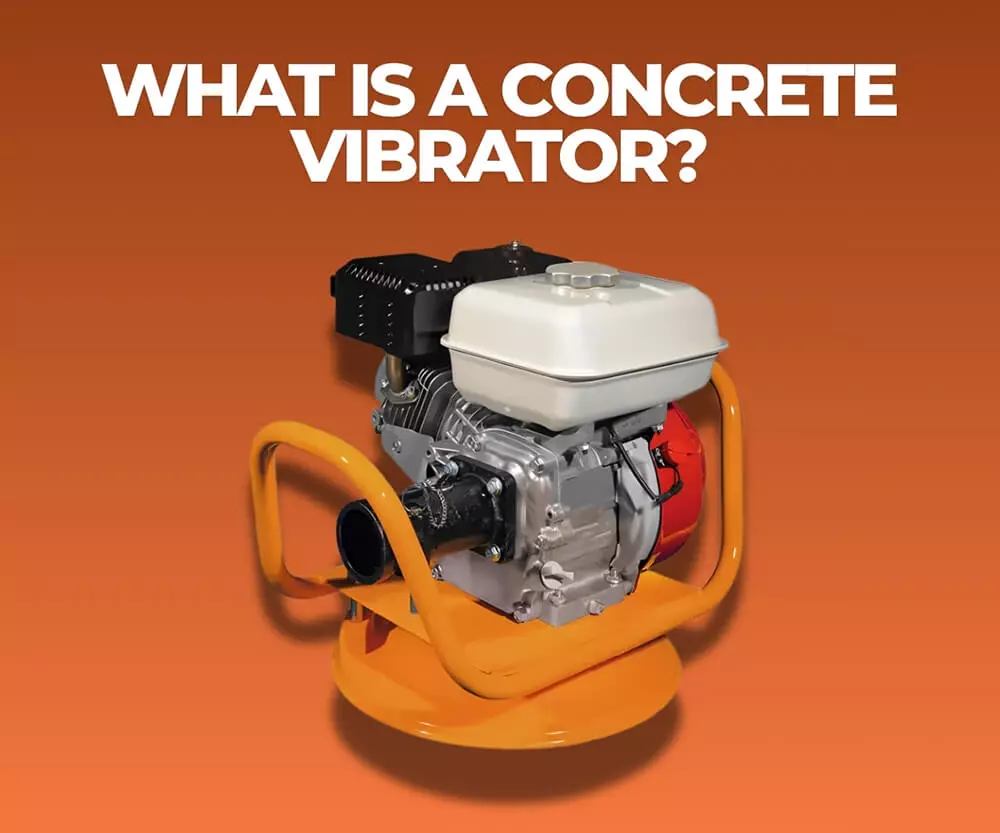
A concrete vibrator is a specialized construction tool used to ensure freshly poured concrete achieves maximum strength and durability. It works by applying high-frequency vibration to consolidate the concrete, allowing the mixture to settle evenly within the form.
The primary purpose of concrete vibration is to remove trapped air pockets and excess water from fresh concrete. During placement, concrete often contains voids caused by air bubbles and its semi-fluid nature. If these voids remain, the concrete can harden with weak spots, reducing compressive strength and increasing the risk of cracking. Vibration compacts the mixture, improves the bond between cement and reinforcing bars, aligns aggregate particles, and eliminates internal gaps.
Technically, vibration temporarily liquefies the concrete, allowing heavier particles to settle while forcing air bubbles to rise to the surface. This process fills voids and produces a dense, uniform concrete structure with a smooth finish. Proper use of a concrete vibrator helps prevent honeycombing and ensures the long-term performance and durability of construction projects.
Several types of concrete vibrators are available, each suited to specific applications and job site conditions. Choosing the right one depends on the project size, concrete type, and formwork design. Selecting the proper vibrator ensures effective compaction and minimizes air pockets.
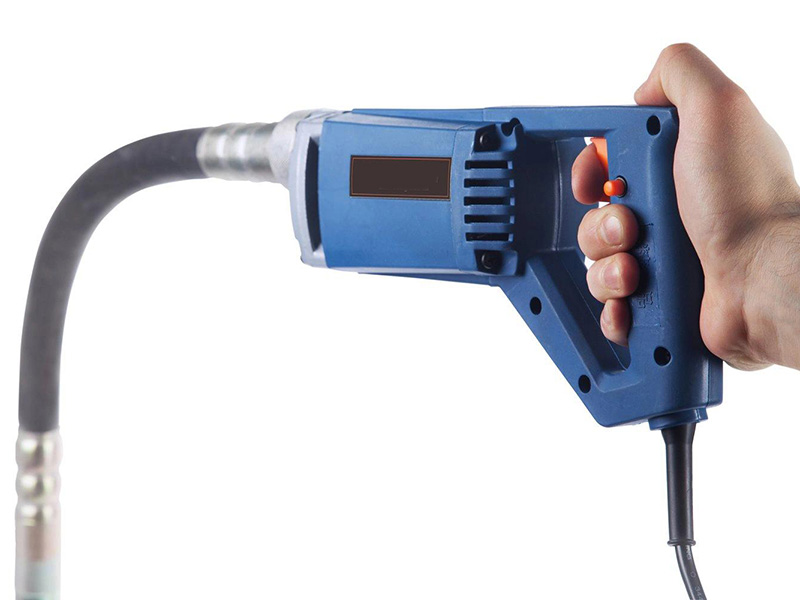
Internal vibrators, also known as needle or poker vibrators, are inserted directly into freshly poured concrete. They consist of a vibrating head connected to a flexible shaft and motor. When immersed, the head vibrates rapidly, causing air bubbles to rise and the concrete to consolidate.
Common uses: Slabs, columns, foundations, beams, and walls.
Advantages: Provide deep, targeted vibration for effective air removal and uniform density, making them ideal for medium to large pours.
External vibrators are mounted on the outside of formwork rather than placed in the concrete. The vibration transfers through the forms, compacting the concrete inside. They are commonly used when internal vibrators are impractical.
Common uses: Thin walls and precast concrete sections.
Advantages: Avoid direct contact with concrete, making them suitable for delicate forms and precast applications.
Surface vibrators are applied to the top of freshly poured concrete. These include vibrating screeds and pan vibrators used to level and compact shallow concrete.
Common uses: Floors, slabs, pavements, sidewalks, roads, and thin floor slabs.
Advantages: Improve surface finish, remove excess air and water, and reduce surface defects.
Vibrating tables are mainly used in precast concrete production. Concrete-filled molds are placed on the table, which vibrates to compact the mix evenly.
Common uses: Precast blocks, tiles, and decorative concrete elements.
Advantages: Produce dense, high-quality precast products with smooth, consistent finishes, ideal for factory settings.
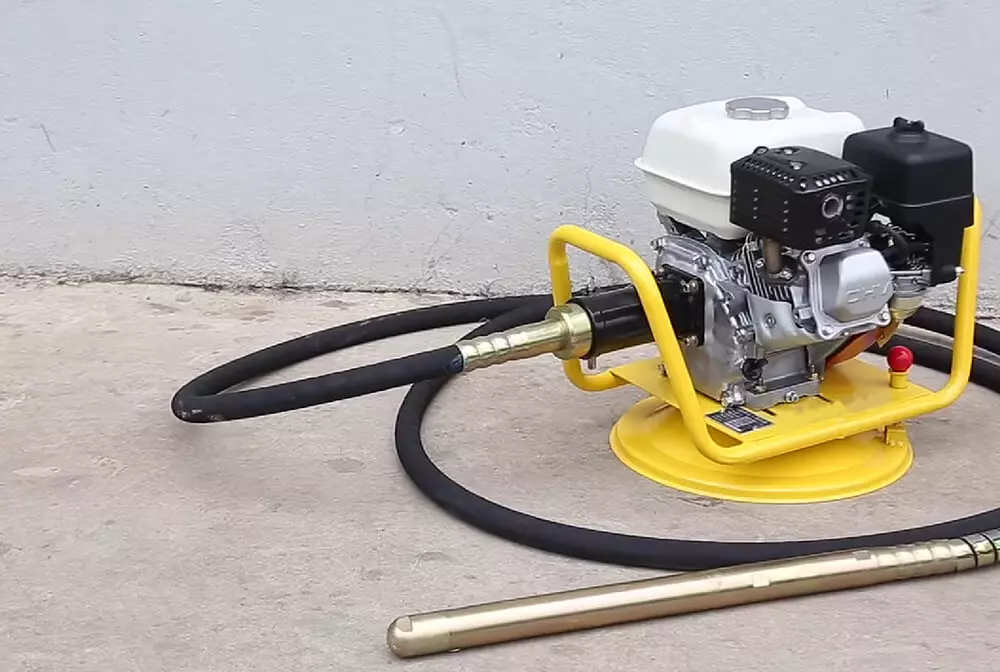
Understanding how a concrete vibrator works helps explain why it is so effective in consolidating concrete. Although the concept is simple, the process relies on precise mechanical action to achieve consistent results.
Concrete vibrators operate by producing high-speed, high-frequency vibrations that are transmitted into freshly poured concrete. These vibrations temporarily cause the mixture to behave like a liquid, a process known as liquefaction. In this state, the cement, sand, aggregate, and water rearrange into a more compact formation. Trapped air bubbles and excess water are forced upward and out of the mix, preventing weak points in the hardened concrete.
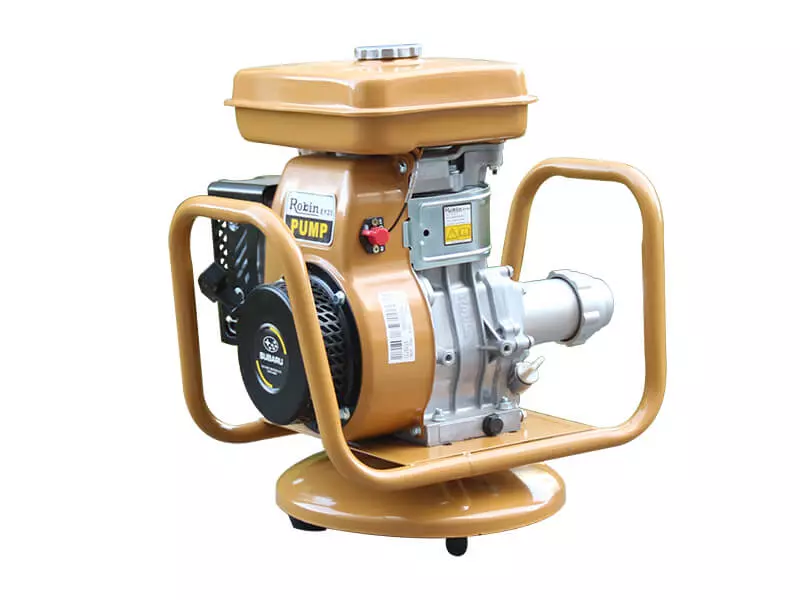
At the core of a concrete vibrator is a motor, which may be electric, gasoline-powered, or pneumatic, depending on the application and work environment. The motor drives a vibrating element, typically a rotating eccentric weight or a high-speed oscillating shaft. In internal (needle) vibrators, this mechanism is enclosed in a cylindrical vibrating head that is inserted directly into the concrete.
The motor transfers motion through a flexible shaft, allowing vibration to reach deep into the concrete, including corners and complex formwork. Inside the vibrating head, the eccentric weight spins rapidly, generating vibration waves that spread through the surrounding concrete. This action allows heavier particles to settle, air bubbles to escape, and water to distribute evenly, resulting in dense and uniform concrete ready to cure.
The effectiveness of vibration depends on frequency and amplitude. Frequency is measured in vibrations per minute (VPM), while amplitude refers to vibration strength. Lower frequencies, around 3,000–6,000 VPM, are typically used for stiff mixes with coarse aggregate, while higher frequencies, up to 12,000 VPM, are better suited for flowable concrete with finer materials.
When the correct frequency and duration are applied, concrete vibrators reduce voids, prevent honeycombing, and improve the bond between cement paste and reinforcing bars. This leads to stronger, more durable concrete with improved resistance to cracking and environmental damage.
A concrete vibrator is essential for producing strong, durable, and defect-free concrete. By improving compaction and reducing air pockets, it significantly enhances overall construction quality. The key benefits include:
Vibration removes trapped air and excess water, creating denser concrete with fewer internal weaknesses and greater stability.
By allowing concrete to flow around corners and reinforcement, vibration prevents honeycomb formation. Eliminating air pockets reduces voids that can weaken the structure and allow water or chemicals to penetrate.
Vibrated concrete settles tightly around rebar and mesh, improving contact and bonding. This increases load-bearing capacity, structural strength, and resistance to stress.
Vibration reduces porosity, making concrete more resistant to moisture, freeze-thaw cycles, and harsh chemicals. Dense, uniform concrete achieves higher compressive strength and long-term durability.
Concrete vibrators help the mix settle evenly within formwork, producing smooth, clean surfaces. This improves appearance and reduces the need for additional finishing work, especially for visible or decorative elements.
Well-compacted concrete is less prone to cracks and structural defects, lowering future repair and maintenance requirements.
Proper vibration minimizes defects and rework, helping projects stay on schedule. It also supports compliance with construction standards and building codes that require adequate compaction.
Effective vibration results in stronger, cleaner, and more reliable concrete that performs consistently over time.
In summary, using a concrete vibrator improves strength, durability, surface quality, and compliance, making it an indispensable tool on any construction site.
BISON concrete vibrators are widely used across a range of construction projects to ensure strong, durable, and visually consistent concrete. Common applications include:
In homes, apartments, and other residential structures, concrete vibrators are used for slabs, walls, and foundations. Proper vibration improves structural integrity, helps prevent cracking, and produces smooth floor and wall finishes.
For infrastructure projects such as bridges, highways, and overpasses, vibration is essential to achieve dense, high-strength concrete capable of withstanding heavy traffic loads. It also removes air pockets that can reduce long-term durability.
Large-scale projects like dams, tunnels, and underground structures require uniformly compacted concrete to resist water pressure and environmental stress. Vibration ensures consistent density and reduces the risk of leaks or structural failure.
Precast products including blocks, panels, beams, and decorative elements rely on table and poker vibrators during factory production. Vibration creates smooth, void-free concrete elements ready for installation.
Across all these applications, concrete vibrators play a key role in achieving maximum strength, long-term durability, and high-quality surface finishes, making BISON vibrators a reliable choice for construction projects of any scale.
Concrete vibrators are effective on most types of concrete, including standard mixes and high-strength concrete with different aggregate sizes. However, the vibration frequency and amplitude should be adjusted based on the mix consistency and specific application.
The right concrete vibrator depends on the project type, concrete mix, and formwork. Needle vibrators are suitable for small-scale projects and shallow pours, while larger or more complex projects may require external or surface vibrators for better coverage and efficiency.
Both electric and gasoline vibrators can be effective when used correctly. Electric vibrators are ideal for indoor or smaller projects, while gasoline vibrators offer greater mobility and power for large outdoor applications. Proper operation is essential regardless of the power source.
Concrete vibrators are indispensable tools in modern construction, not optional accessories. By eliminating air pockets and ensuring uniform compaction, they significantly improve concrete strength, durability, and surface appearance. Proper vibration produces dense, strong, and visually consistent concrete while improving bonding with reinforcement and delivering smooth finishes.
From residential buildings to bridges, tunnels, and precast elements, concrete vibrators play a vital role in creating long-lasting, high-quality structures. Understanding the different types and choosing the right vibrator makes a clear difference in both performance and appearance. BISON offers a wide range of concrete vibrators designed to help achieve reliable, professional results on every project.
Take the first step toward flawless concrete — explore BISON concrete vibrators today.
inquiry form here
BISON BLOG, All the latest news and views from Bison Machinery.
what's hot?
Related Articles
what equipment do you use for demolition? what is a concrete vibrator? what equipment do you need to pour a concrete sidewalk mix concrete in a mixer how to clean a concrete mixerRelated Products