18May 2026
table of contents
Demolition involves more than simply knocking down walls. It requires careful planning and specialized equipment to complete projects safely and efficiently while minimizing damage to nearby structures.
Whether handling a commercial interior gut or a full industrial teardown, choosing the wrong equipment can delay the entire project. A standard steel blade striking an embedded fastener can stop progress instantly, while an undersized breaker can turn a simple slab removal into a lengthy process. Mismatched equipment can also compromise structural integrity, create safety hazards. While using the proper demolition equipment helps maintain project timelines, improves site safety, and increases overall efficiency.
From heavy machinery for large structures to precision hand tools for detailed work, every type of demolition equipment serves an important role. This demolition equipment guide helps match the right tools — to specific materials and site conditions, ensuring the most efficient setup for most demolition project.

Demolition projects require different tools and machines to handle various materials and structural types. Using the right equipment improves efficiency, reduces risks, and ensures structures are removed properly.
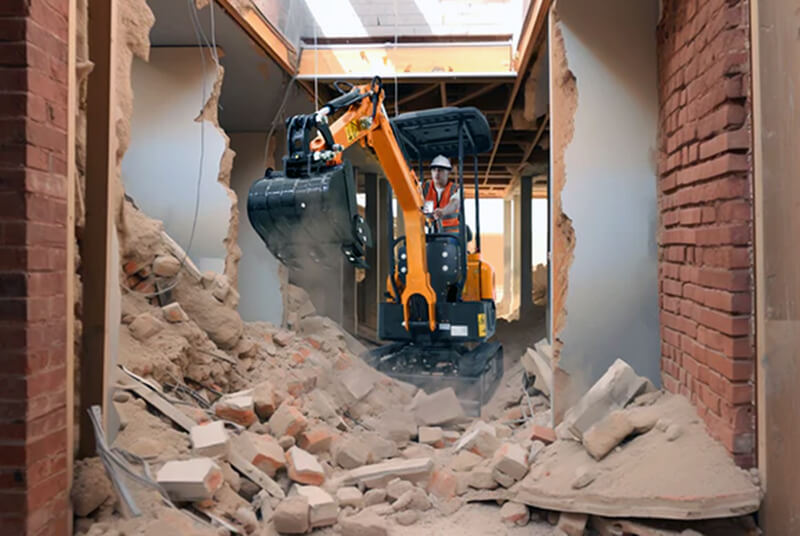
Excavators are versatile machines equipped with hydraulic arms and attachments such as breakers, grapples, and crushers. They can handle concrete, steel, brick, and other hard materials, making them suitable for residential and large-scale industrial demolition.
Best-case scenario: Large-scale commercial or industrial demolition requiring fast removal of walls, concrete slabs, and steel frames.
Applications: Removing building sections, clearing construction debris, and breaking reinforced concrete foundations. Suitable for tasks that require both power and precision.
Wrecking balls are suspended from cranes to deliver controlled impact to tall or rigid structures. Although less common today, they remain effective for demolishing large buildings where power and controlled force are required.
Best-case scenario: Demolishing tall and rigid structures that are difficult to access with other machinery.
Applications: Demolishing high-rise buildings, warehouses, and industrial chimneys where controlled impact is needed. Best suited for open areas to minimize collateral damage.
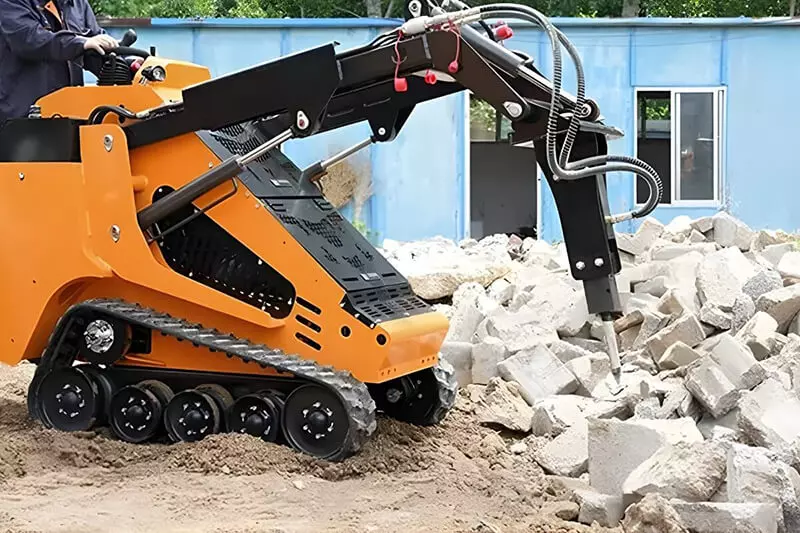
Also known as jackhammers, hydraulic breakers are used to break concrete, asphalt, and stone. Available as handheld or excavator-mounted tools, they are suitable for urban areas and confined spaces.
Best-case scenario: Urban or confined spaces where concrete must be broken without affecting nearby structures.
Applications: Breaking sidewalks, asphalt roads, walls, concrete floors, reinforced concrete slabs, deep foundations, and bridge decks. Also used for foundation removal and renovation projects involving reinforced concrete.
Bulldozers use heavy front blades to push structural debris into centralized piles and level demolition sites. They are essential for debris removal and maintaining a safe, organized work environment.
Best-case scenario: Sites with large debris piles or uneven terrain that require clearing and leveling.
Applications: Pushing debris, clearing demolition sites, grading land, and preparing areas for reconstruction.
Cranes fitted with attachments such as concrete pulverizers, shears, and grapples are used to dismantle multi-story structures. They allow operators to cut steel beams and crush concrete with precision, improving safety and efficiency.
Best-case scenario: Multi-story demolition projects that require lifting and cutting heavy structural components.
Applications: Removing steel beams, dismantling reinforced concrete sections, and lowering heavy debris from elevated floors. Commonly used in office towers and commercial buildings.
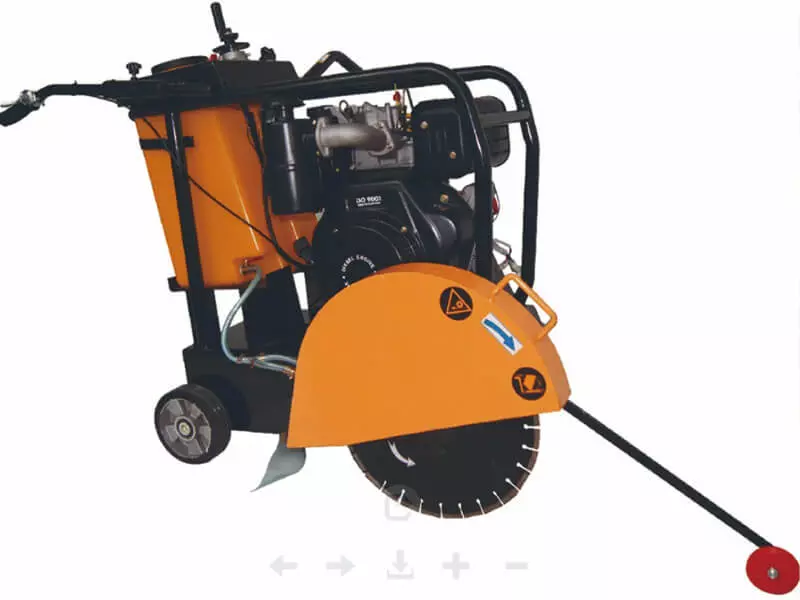
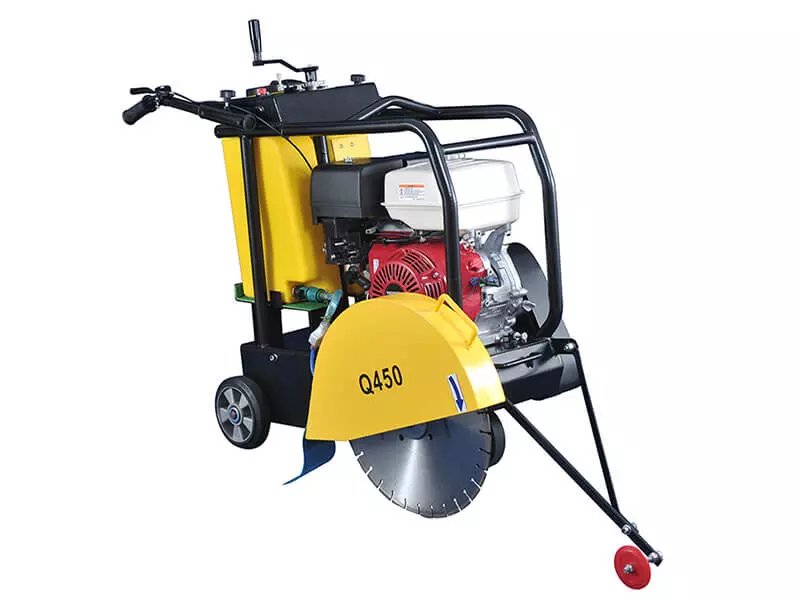
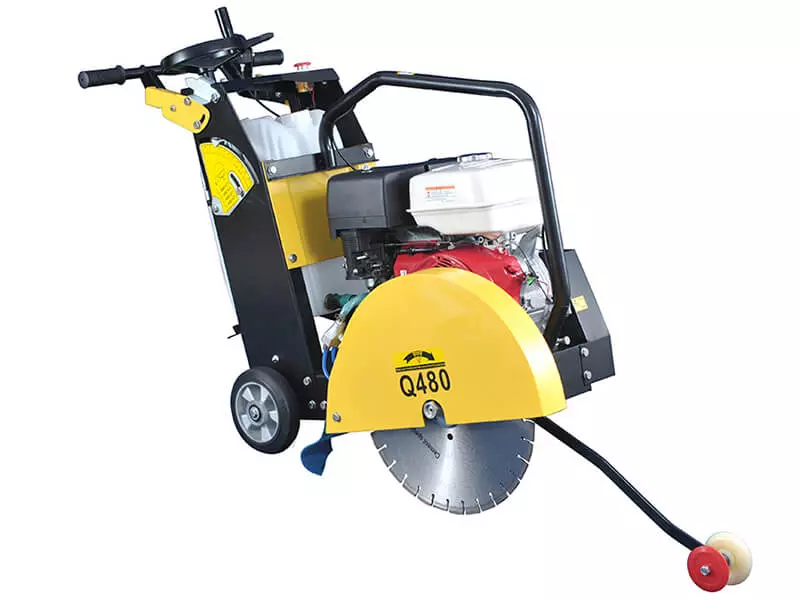
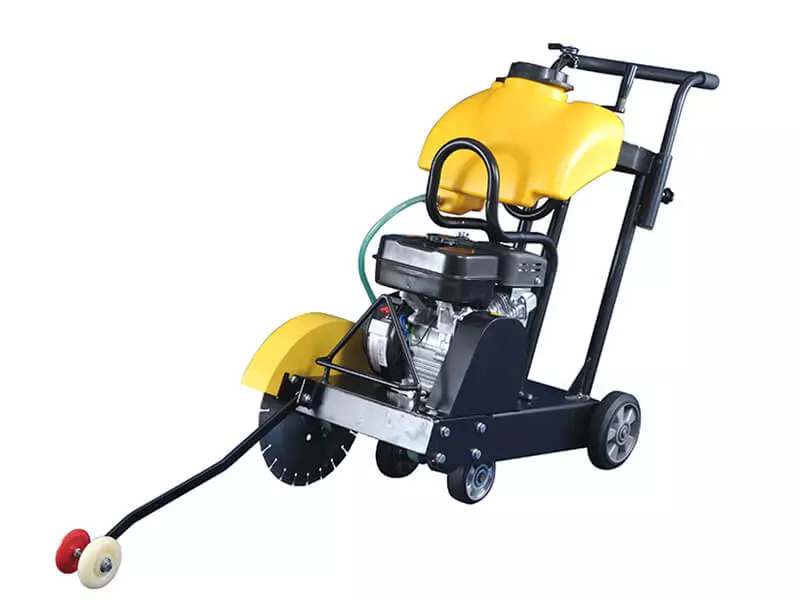
Circular saws, concrete saws, cut-off saws, reciprocating saws, and plasma cutters are used for precise demolition work. These tools cut through steel frames, pipes, slabs, walls, wood framing, PVC piping, and light-gauge metal while minimizing damage to surrounding areas.
Gas-powered concrete saws provide mobility for outdoor projects, while electric saws are suitable for indoor use because they produce no fumes. Diamond blades are commonly used for cutting concrete and rebar through wet or dry cutting methods.
Best-case scenario: Projects requiring controlled removal of specific components without damaging surrounding structures.
Applications: Commonly used for renovations, selective demolition, and heritage structures where material salvage is important.
Loaders provide strong traction on unstable surfaces and help clear debris without damaging nearby structures. Skid steer and compact track loaders are commonly used for interior demolition because they can operate in confined spaces within residential and commercial buildings. Quick-attach systems allow operators to switch between tools efficiently, improving productivity on the job site. Loaders transfer debris into dump trucks for removal, helping maintain workflow and site organization during demolition projects.
Best-case scenario: Demolition sites generating large amounts of debris that require continuous removal.
Applications: Moving debris, transporting demolition waste to recycling facilities, and supporting large commercial or industrial demolition operations.
Hand tools such as hammers, sledgehammers, pry bars, wrecking bars, chisels, mauls, and screwdrivers are used for controlled and delicate demolition work. They help workers remove materials safely, separate structural components, and extract heavy-duty fasteners from framing.
Best-case scenario: Small-scale or delicate demolition work requiring precision and control.
Applications: Removing windows, doors, fixtures, and salvageable materials. Also used for detailed finishing work after heavy equipment completes major demolition tasks.
Industrial shredders and crushers reduce debris volume by crushing materials such as concrete, wood, and metal. These machines improve transportation efficiency and support recycling by separating materials like embedded rebar from concrete for on-site processing.
Best-case scenario: Projects producing large volumes of debris that need efficient disposal or recycling.
Applications: Crushing concrete for reuse, processing metal frames and wood panels for recycling, and managing demolition waste in an environmentally responsible manner.
Demolition robots are remotely controlled machines designed for hazardous environments. They can break concrete, cut steel, and remove toxic materials while reducing risks to workers.
Best-case scenario: Hazardous environments where direct human involvement is unsafe.
Applications: Breaking concrete in chemical plants, handling asbestos-contaminated structures, and performing precise demolition in confined or high-risk areas.
Understanding where each type of demolition equipment performs best helps improve efficiency, safety, and cost-effectiveness.
Increased efficiency: Heavy equipment such as excavators, bulldozers, and hydraulic breakers can remove large structures much faster than manual methods. This shortens project timelines, allows multiple tasks to be completed at the same time, and helps reduce labor costs caused by delays.
Improved safety: Demolition equipment minimizes workers' direct exposure to hazardous conditions. Remote-controlled robots, cranes, and hydraulic tools help keep workers away from unstable structures, falling debris, and dust, lowering the risk of accidents and injuries.
Precision and control: Specialized equipment such as cutting saws, concrete pulverizers, and hydraulic breakers allows accurate demolition while limiting damage to nearby structures. This is especially important for urban projects and selective demolition work.
Cost-effectiveness: Although demolition machinery may require a significant initial investment, it helps reduce overall project costs by minimizing property damage, lowering labor expenses, and preventing project delays.
Versatility: Modern demolition machines can use different attachments, including grapples, crushers, shears, and pulverizers. This enables a single machine to perform multiple tasks, from concrete breaking to debris sorting and recycling.
Waste management and recycling: Crushers and shredders help reduce debris volume and support the recycling of materials such as concrete, metal, and wood. This promotes sustainable demolition practices and reduces landfill waste.
Capability for large projects: Equipment such as cranes, wrecking balls makes it possible to demolish large industrial and commercial structures that cannot be removed manually.
Reduced labor intensity: Mechanized demolition decreases the physical demands on workers, allowing crews to focus more on safety, site management, and precision tasks instead of heavy manual labor.
While demolition equipment offers efficiency and safety, there are some limitations that project planners should consider:
High initial costs: Purchasing or renting heavy machinery such as excavators, cranes, and industrial shredders can be expensive. Small contractors or projects with limited budgets may struggle with the upfront costs.
Maintenance requirements: Demolition equipment requires regular inspection, maintenance, and repairs to operate safely and efficiently. Poor maintenance can lead to equipment failure, project delays, and increased long-term expenses.
Need for skilled operators: Complex machinery such as hydraulic breakers, cranes, and demolition robots requires trained and certified operators. Lack of proper expertise can increase the risk of accidents and structural damage.
Limited access in confined spaces: Large demolition machines may have difficulty operating in tight urban areas or small residential spaces. Additional hand tools or compact equipment may be needed, which can slow down the project.
Environmental concerns: Heavy equipment generates noise, dust, and emissions. Without proper dust suppression and noise control measures, demolition activities can affect workers and nearby communities.
Risk of accidents when improperly used: Improper operation, poor planning, or inadequate safety measures can lead to serious accidents, property damage, or structural collapse.
Dependence on power or fuel: Most demolition equipment depends on diesel, electricity, or hydraulic power. Fuel shortages or power interruptions can disrupt operations and reduce productivity.
Evaluate the project scale and timeline first when consulting any demolition equipment guide. Material types influence tool wear rates, while tight schedules require higher-capacity machines. Machine breakout force should correspond to structural compressive strength, as underpowered equipment slows production and overpowered machinery increases fuel consumption and the risk of collateral damage.
Assess physical site constraints early to ensure equipment meets floor load capacities and can pass through narrow doorways.
Renting is appropriate for short-term or specialized tasks to preserve capital, while purchasing is more cost-effective for high-use core equipment, since frequent use justifies the initial capital expenditure.
Proper maintenance of demolition equipment ensures safety, durability, and optimal performance. Neglecting maintenance can lead to malfunctions, costly repairs, and accidents.
Regular inspection: Demolition environments can quickly damage poorly maintained tools, so consistent inspections are necessary. Check all machinery, attachments, and tools for wear, cracks, or hydraulic leaks before and after use. Early identification of issues helps avoid equipment failure on site.
Lubrication: Proper lubrication of all moving parts reduces friction, prevents overheating, and extends the lifespan of hydraulic arms, joints, and bearings.
Cleaning: Remove dust, debris, and concrete residue from machines and tools after each project to prevent buildup that can damage components and reduce performance.
Filter replacement: Air, fuel, and hydraulic filters should be changed according to manufacturer guidelines. Clean filters help maintain efficient engine and hydraulic system operation.
Proper storage: Store hand tools and small equipment in dry and secure areas to prevent rust, corrosion, and environmental damage.
Follow the manufacturer's maintenance schedule for heavy machinery such as excavators, crushers, and cranes to ensure safe and efficient operation.
Safety is essential in demolition. Using the right equipment alone is not sufficient, as strict safety measures protect workers, nearby property, and the environment. Standardizing safety equipment purchases reduces liability and injury-related downtime while protecting workers from falling debris.
Personal protective equipment (PPE): Workers should consistently wear helmets, gloves, impact-resistant face shields, steel-toed boots, goggles, ear protection such as acoustic earmuffs, and high-visibility or cut-resistant clothing to minimize injury risks.
Dust and debris control: Use water sprays, misting systems, or vacuum extractors to reduce airborne particles. Effective dust control systems include industrial water misting systems, high-capacity water cannons, and oscillating dust suppression units. Proper dust control protects workers and reduces respiratory hazards.
Site security: Secure perimeter control separates hazardous work zones from public areas and ensures compliance with safety regulations. Temporary fencing and rigid barriers should be used, along with clear signage to warn against entry. For elevated work areas, fall protection systems must be implemented, including full-body safety harnesses, shock-absorbing lanyards, and secure anchor points.
Structural assessment: Buildings should be inspected before demolition to identify weak points, load-bearing elements, and potential hazards. Understanding the structure allows for a safer and more controlled demolition sequence.
Education and accreditation: Operators of demolition equipment, explosives, and heavy machinery must be properly trained and certified to ensure safety, accuracy, and legal compliance.
Emergency preparedness: First-aid kits, fire extinguishers, and evacuation plans should always be available. Quick response to emergencies helps prevent injuries and minimize property damage.
Each tool, from heavy machinery to hand tools, serves a specific function in demolition. Aligning the appropriate equipment with each task improves operational efficiency, maximizes salvage value, and helps control costs.
Besides, Proper planning, equipment upkeep, and compliance with safety protocols reduce risks while enhancing productivity and sustainability on demolition sites.
As a direct manufacturer, BISON recognizes the demanding conditions of job sites. The company develops professional-grade equipment designed for continuous daily use. Whether for wholesale pricing, OEM/ODM customization, or long-term parts support, factory-direct solutions. Contact BISON to request bulk quotations, and equip teams to handle projects with confidence.
Excavators fitted with hydraulic attachments are highly versatile and can handle concrete, steel, and brick in different types of projects.
Yes, small-scale demolition can be carried out using hand tools and hydraulic breakers, but larger projects require machinery for greater efficiency and safety.
inquiry form here
BISON BLOG, All the latest news and views from Bison Machinery.
what's hot?
Related Articles
mini excavator sizes: choosing the right size for your project how to change the bucket of a mini excavator large excavators vs mini excavators what equipment do you use for demolition? common questions about excavator hydraulic systemsRelated Products