28Apr 2026
table of contents
Mini excavators are compact yet powerful machines that can dig, lift, grade, and demolish with precision, making them essential for contractors, rental companies, and DIY professionals.
Transporting a mini excavator requires careful planning, the right equipment, and strict adherence to safety practices. Although these machines are smaller than full-size excavators, improper handling during transport can cause accidents, equipment damage, or legal penalties. Whether moving the machine to a job site or onto public roads, operators and logistics teams must follow the correct transport process.
Safe transport protects the excavator and ensures the safety of drivers and road users. From selecting the right trailer to properly securing the load, every step helps prevent costly mistakes and project delays.
This guide walks you through the process of transporting your mini excavator safely, helping you protect your equipment, stay compliant, and keep your projects running smoothly.
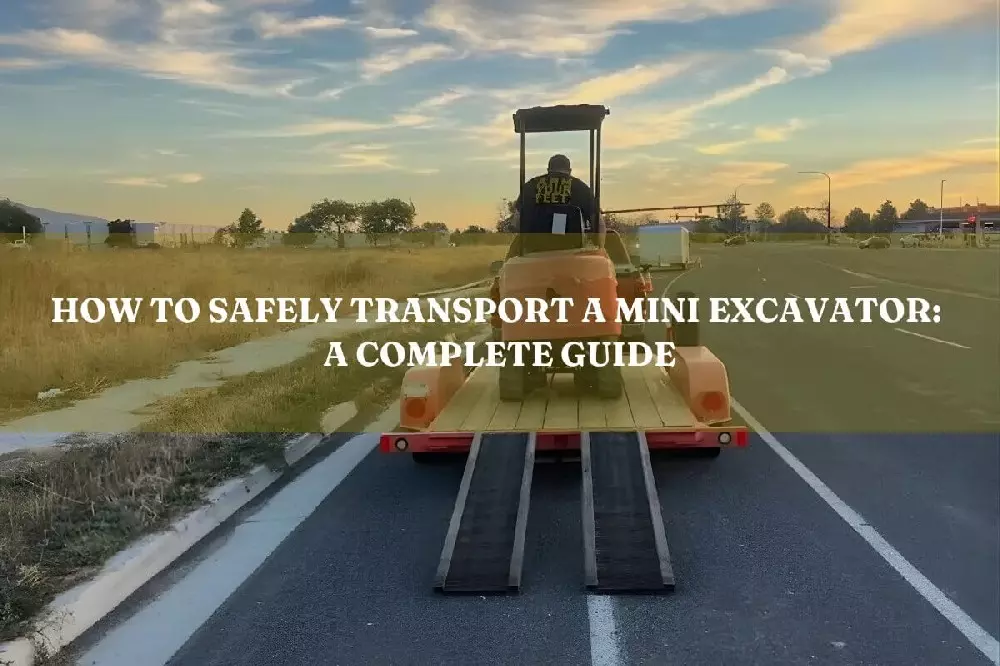
Mini excavators are compact, but before loading a mini excavator onto a trailer, transporting them safely requires understanding its specifications, weight limits, legal responsibilities, and stability factors. Ignoring these requirements can lead to mini excavators damage, road hazards.
Weight ratings: Mini excavators typically weigh 1 to 6 tons, depending on model size, undercarriage width, and installed attachments. Machines with steel tracks, enclosed cabs, or auxiliary hydraulics often weigh more than standard configurations. Knowing the correct operating weight is essential for towing the appropriate trailer and vehicle and avoiding overloading problems.
Dimensions and transport profile: The overall width, height, and length affect how a mini excavator can be transported. Wider tracks or extended booms can increase the transport profile, requiring special care on narrow roads or job site access points. Height is especially important when planning routes that involve bridges, tunnels, or overhead power lines.
Legal and regulatory compliance: Transportation regulations vary by region but generally include axle load limits, gross vehicle weight limits, and load safety standards.
Permits and licenses: Some regions require special permits for moving equipment over certain weights or dimensions. Ensure the vehicle operator has the proper licenses.
Route restrictions: Certain roads, bridges, and tunnels have weight or height limits. Plan your route carefully to avoid fines or hazards.
Stability and center of gravity: The center of gravity varies with attachment position and track width. Improper positioning during transport can cause shifting, especially during braking or cornering. Retract and lower the boom and arm to reduce height and center of gravity. Place the bucket flat against the trailer deck to maximize stability and minimize movement during transit.
Road and environmental factors: Road conditions, weather, and travel distance affect transportation requirements. Rough roads increase vibration, while rain or mud can reduce traction during loading and unloading. Accounting for these factors allows operators to adjust speeds, tie-down methods, and inspection frequency during transit.
Selecting the right trailer, truck, and hitch system is a critical step when moving a mini excavator. Proper transport equipment protects the machine, ensures safe handling, and keeps the process legal and efficient. An ill-fitting trailer increases risk and reduces control.
Flatbed trailers: Simple and versatile, can carry other types of equipment. Requires additional equipment such as ramps or a loading dock to load and unload safely.
Tilt deck trailers: The deck tilts, allowing the excavator to drive on and off without separate ramps, reducing loading time and risk. Slightly more expensive and may have lower weight capacities than heavy-duty flatbeds.
Beavertail trailers with ramps: Equipped with built-in ramps for straightforward loading and unloading. Designed for heavy equipment with low deck heights for stability. Ramps take up extra space, and careful positioning is needed to prevent tipping.
The trailer's gross vehicle weight rating (GVWR) must exceed the total weight of the trailer, excavator, fuel, and attachments. Overloading compromises braking performance, suspension, and structural integrity, increasing the risk of accidents and costly repairs.
The towing vehicle must safely handle the combined weight of the trailer and excavator. The suspension, braking system, and hitch rating must align with the trailer and excavator weights.
Ensure the trailer has a functional braking system appropriate for its weight; heavier excavators may require electric or hydraulic trailer brakes by law.
Check the hitch system — the ball or gooseneck must be rated for the total loaded weight. A properly matched hitch improves stability and reduces sway during transport.
Proper preparation reduces the risk of damage, improves safety during loading, and ensures a smooth transport. Cleaning, inspecting, and positioning the machine correctly also helps identify potential problems before they become serious on the road.
Clean the machine: Remove mud, dirt, and debris from tracks, undercarriage, and attachments. A clean machine is easier to inspect and prevents materials from falling onto the road during transport.
Machine pre-transport inspection: Check for loose bolts, worn hoses, cracked welds, broken pins, and leaks in hydraulic lines or fittings. Please make sure you complete the pre-trip checklist before departure:
Tires: Check pressure and condition on both the excavator and trailer.
Lights: Ensure all trailer lights, brake lights, turn signals, and reflectors are working.
Brakes: Test trailer and vehicle brakes.
Ramps and loading equipment: Inspect for damage, proper angle, and secure placement.
Address any issues before transport to avoid breakdowns or unsafe conditions.
Securing or removing attachments: Buckets, augers, breakers, and other attachments should be removed if detachable or securely fastened if fixed.
Check fluid levels and prevent leaks:Inspect fuel, engine oil, coolant, and hydraulic fluid levels. Ensure all filler caps and covers are tightly closed. Secure or cap hydraulic hoses to prevent leaks and contamination.
Incorporate safety and locking systems: Engage parking brakes, hydraulic lock levers, and safety pins according to manufacturer recommendations. These systems prevent unintentional movement and stabilize the excavator once it is loaded.
Follow emergency procedures: Be prepared for load shifts, equipment malfunctions, or sudden weather changes. Have a plan for safely stopping the load, securing the trailer, and notifying others if an emergency occurs.
Use personal protective equipment (PPE): Wear steel-toed boots, gloves, high-visibility vests, and safety glasses during loading, unloading, and securing operations. PPE protects against pinch points, falling debris, and other hazards.
Consult operator manuals and local regulations: Review the excavator's operator manual for manufacturer-specific transport guidelines. Check local laws, permit requirements, route restrictions, and weight limits to ensure compliance and safe road travel.
Proper preparation ensures a safer, smoother, and more efficient journey. A clean, inspected, and securely positioned mini excavator reduces risks on the road and sets the stage for a successful job at the destination.
Loading a mini excavator onto a trailer is a critical step in the transport process. Careful setup, controlled movement, and constant awareness are essential to prevent tipping, sliding, or uneven weight distribution.
Place the trailer on firm, level ground with enough space for the excavator to operate safely. Avoid soft soil, slopes, or uneven surfaces that could cause trailer movement or ramp failure. Use wheel chocks behind the trailer wheels to prevent rolling.
Back the trailer straight and close to the loading area, ensuring stability. Confirm the trailer is secure and won't move during loading.
Ensure ramp width matches the track width of the excavator to prevent slipping.
Verify ramps are rated to support the full weight of the mini excavator and free from cracks, bends, or excessive wear.
Attach ramps securely to the trailer and check for a gradual incline to maintain traction.
Position the excavator perpendicular to the ramp's center before moving forward. Proper alignment ensures even weight distribution and reduces the risk of slipping or rollover.
Drive the excavator at low speed with smooth, controlled motion. Avoid sudden acceleration, braking, or sharp turns. Keep the boom low and the arm tucked in to maintain a low center of gravity and improve stability.
Ensure clear visibility of the ramp and trailer deck. If visibility is limited, use a trained spotter to guide the operator with hand signals or radio communication.
Once on the trailer, gradually bring the excavator to a stop and position it according to weight distribution requirements. Sudden stops can stress the ramp and trailer, increasing the risk of damage or movement.
By following these steps — moving slowly, maintaining communication, and using a spotter — you can load your mini excavator safely and efficiently, preparing it for secure transport to the job site.
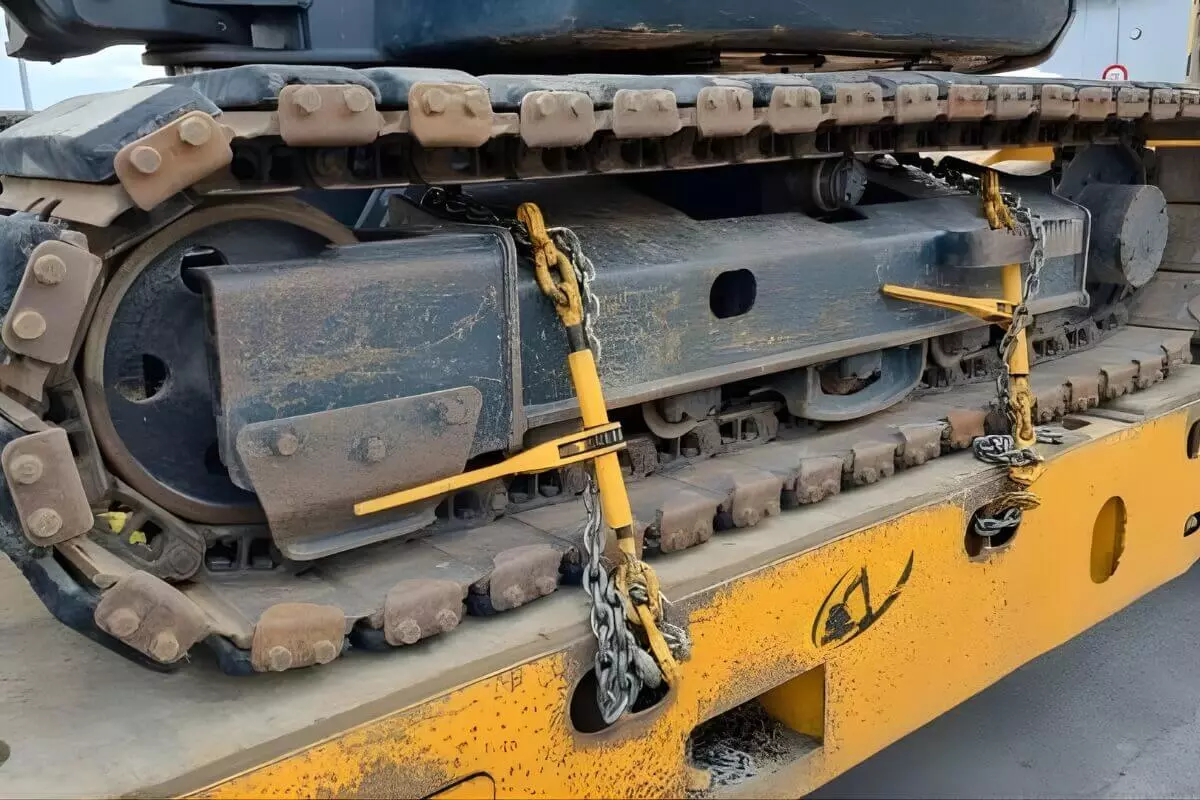
Correct placement of the mini excavator on the trailer is essential for stability, axle load balance, and overall vehicle control. Even a well-secured machine can cause handling problems if positioned incorrectly.
Longitudinal balance: Position the excavator so roughly 60% of its weight is toward the front of the trailer and 40% toward the rear. This distribution reduces trailer sway, prevents uneven tire wear, and ensures safer braking and towing performance.
Side-to-side weight equalization: Center the machine on the trailer to prevent excessive lateral forces during turns. Ensure the excavator does not extend beyond the trailer edges, and align attachments with the centerline for balanced weight distribution. Attachments such as buckets, blades, or augers affect weight distribution and height. Improper placement can change the overall mass profile, increasing stress on safety points, suspension, and tie-downs.
Properly securing a mini excavator prevents shifting, tipping, or accidents during transport. Effective restraint depends on both the quality of the equipment and correct placement on the machine.
Understand structural load paths: Tie-down forces should pass through solid structural areas of the excavator. Weak or flexible components can deform under stress, reducing the effectiveness of restraints.
Motion control and lateral stability
Forward resistance: Braking pushes the excavator toward the front of the trailer. Properly positioned restraints prevent forward movement.
Rearward control: Acceleration and road bumps create rearward forces. Rear restraints counteract these and keep the machine in place.
Lateral stability: Sideways forces during turns or lane changes can loosen tie-downs. Lateral restraints prevent creep and maintain stability.
Vibration fatigue protection: Repeated vibration can gradually loosen restraints. Chains, binders, and straps must withstand micro-movements without failure.
Interaction between tie-down points: Tie-downs work as a system. Balanced force distribution prevents overloading a single chain or strap while underutilizing others.
Chains and binders: Heavy-duty transport chains with ratchet binders are recommended for the main body.
Straps: High-strength ratchet straps can secure lighter attachments.
Working Load Limits: Never exceed the rated WLL of chains, binders, or straps to avoid failure.
Use at least four tie-down points, ideally connecting each corner of the excavator to the trailer. Anchor points should be manufacturer-approved locations to avoid frame damage. Cross-chaining can enhance stability and prevent side-to-side movement during turns or stops.
Inspect all chains, binders, and straps for tightness.
Verify hitch connections, safety chains, and brakes.
Ensure nothing hangs over trailer edges or obstructs wheels or ramps.
Properly securing your mini excavator is not only a legal requirement but a critical safety step. Following these tie-down best practices ensures the equipment, crew, and everyone on the road remain safe during transport.
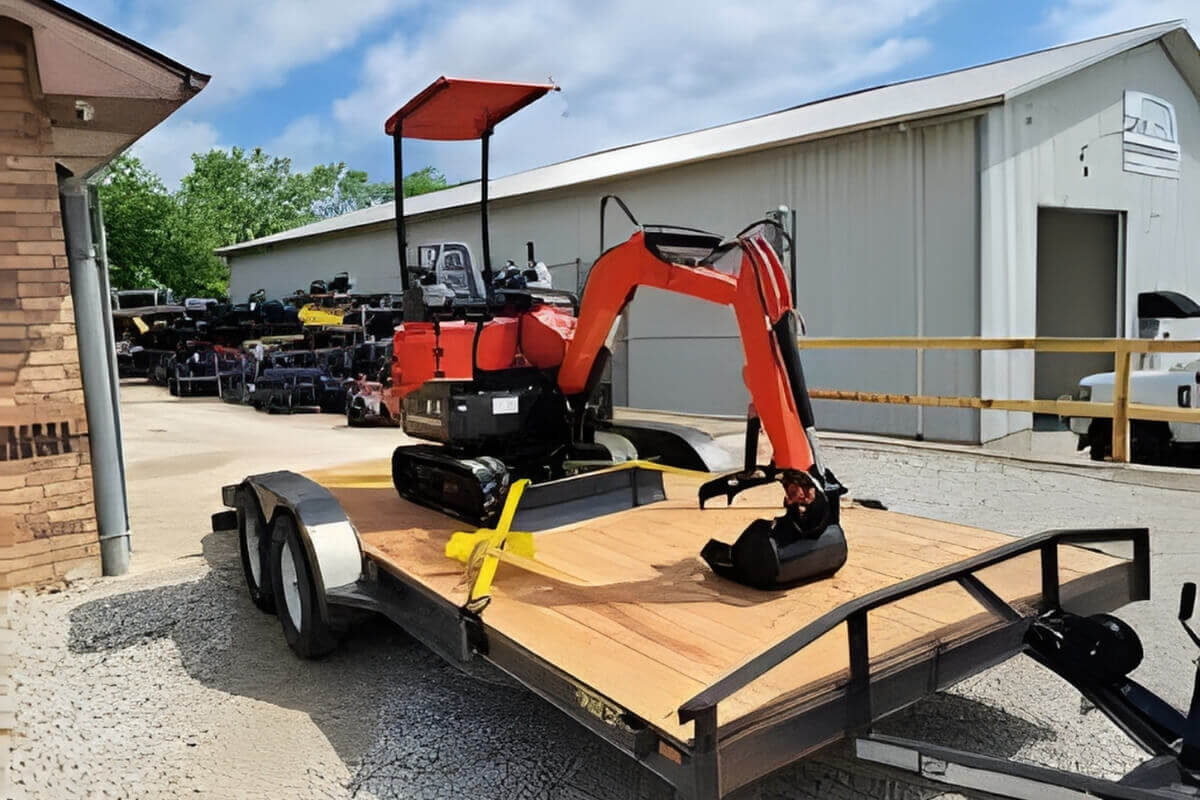
Transporting a mini excavator safely continues once it is loaded and secured. Careful driving practices protect your equipment, towing vehicle, and other road users.
Maintain increased following distance: Heavy loads require longer stopping distances. Keep a safe gap from other vehicles.
Speed and load inertia: The combined mass of the trailer and excavator resists sudden changes in direction. Smooth acceleration reduce stress on the vehicle and restraint system.
Slow down on curves and highways: Reduce speed on turns, ramps, and curves to improve stability and reduce tipping risk.
Take wider turns: Allow extra space to prevent trailer wheels from climbing curbs or road edges.
Anticipate sway: Watch for crosswinds, passing trucks, or uneven roads that may cause trailer sway. Avoid sudden steering inputs and gently reduce speed if sway occurs.
Environmental factors: Rain changes impact traction, visibility, stopping distances, and overall vehicle responsiveness. Drivers should adjust speed and maneuvers according to conditions.
By combining those driving tips, you can safely transport your mini excavator on any route. Staying alert, driving predictably, and planning for hazards ensures a smooth journey for both your equipment and other road users.
Unloading a mini excavator requires awareness of balance, surface conditions, and gravity-related forces. A careful, step-by-step process protects the operator, the machine, and ensures the job can continue without delays.
Firm, level ground: Select firm, level ground to provide predictable track contact and prevent slipping or tipping.
Clear the area: Remove obstacles, debris, or loose materials that could interfere with ramp placement or movement.
Secure the trailer: Place wheel chocks on both sides of the tires to prevent movement.
Set up ramps: Attach ramps securely, ensuring they are rated for the excavator's weight and aligned with the tracks.
Gradual removal: Remove chains, binders, and straps gradually, keeping hands and limbs clear of pinch points.
Final tie-down: Leave one tie-down in place until the machine is ready to move to prevent unexpected shifts.
Once tie-downs are released, the excavator's weight shifts from a restrained to a free position. This changes pressure points on the tracks and ramps, making balance more sensitive. Maintain controlled positioning to prevent rolling or tilting.
Use a spotter: Use a spotter if possible to guide safe positioning during descent.
Move slowly and steadily: Keep the boom low and attachments centered to maintain balance.
Follow the 60/40 rule: Keep roughly 60% of the weight toward the front of the trailer during the initial descent.
Visual inspection: Inspect the excavator for scratches, dents, or loose components.
Check attachments: Inspect buckets or augers to ensure they remained secure.
Functional checks: Perform functional checks on hydraulics, tracks, and controls before using the machine on-site.
Following these steps ensures safe and efficient unloading, protects your equipment and team, and prepares the mini excavator for immediate use on the job site.
Even experienced operators can make errors when transporting a mini excavator. Being aware of these common mistakes helps reduce risk, protect equipment, and ensure compliance with regulations.
Overestimating capacity: Assuming a trailer or vehicle can handle more than its rated weight can cause mechanical stress, loss of control, and accidents.
Relying on visual checks alone: Tie-downs that appear tight may not be properly tensioned. Always verify security to prevent failure during braking or turns.
Ignoring attachment weight: Attachments such as buckets or hydraulic tools add mass and affect balance. Failing to account for them can compromise positioning and tie-down effectiveness.
Neglecting regulations: Ignoring transportation rules, permits, or route restrictions can result in fines, delays, or insurance issues after an incident.
Rushing the transport process: Skipping inspections, checks, or planning due to time pressure increases the risk of accidents and equipment damage.
Transportation exposes a mini excavator to vibration, load cycling, and restraint stresses that differ from normal operation. Post-transport inspections help identify early signs of wear and ensure the machine remains reliable and ready for use.
Structural and fastener integrity: Check bolts, pins, and mounting hardware for looseness caused by movement and vibration. Retighten or adjust components as needed before resuming operations.
Hydraulic and fluid system condition: Inspect hydraulic lines, fittings, and seals for leaks or damage. Check fluid levels to ensure proper pressure and performance on the job site.
Undercarriage and track response: Assess track alignment, tension, and roller condition. Vibration and shifting loads during transport can affect these components and impact machine stability.
Lubrication and wear prevention: Transport can remove grease from critical points. Reapply lubrication to reduce friction, prevent rapid wear, and maintain smooth operation.
Transporting a mini excavator safely requires careful planning, the right equipment, and disciplined execution at every stage. From selecting the proper trailer and performing thorough pre-transport preparation, to securing the load, maintaining proper weight distribution, and driving defensively, each step contributes to the safety of the operator, the public, and the equipment.
Following these best practices reduces the risk of accidents, prevents damage, minimizes downtime, and ensures the mini excavator arrives at the job site ready to perform. Safety is the foundation of every successful transport operation.
Disclaimer: This guide is for general information only. Procedures may vary depending on your mini excavator model. Always consult the operator's manual or a qualified mechanic if you are unsure about any step.
At BISON, we design mini excavators with durability, performance, and transport safety in mind. Handle your equipment correctly to get the most out of your machine safely and efficiently.
inquiry form here
BISON BLOG, All the latest news and views from Bison Machinery.
what's hot?
Related Articles
mini excavator sizes: choosing the right size for your project how to change the bucket of a mini excavator large excavators vs mini excavators what equipment do you use for demolition? common questions about excavator hydraulic systemsRelated Products