23Jan 2026
table of contents
Finishing large concrete slabs by hand is slow, tiring, and difficult. Even skilled workers can struggle to achieve a smooth, even surface, which may result in weak spots, cracks, and an unprofessional appearance.
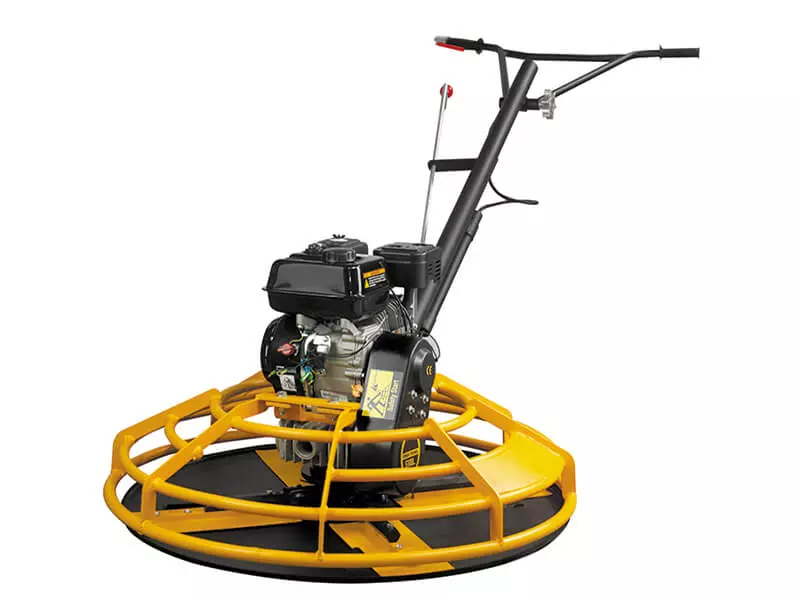
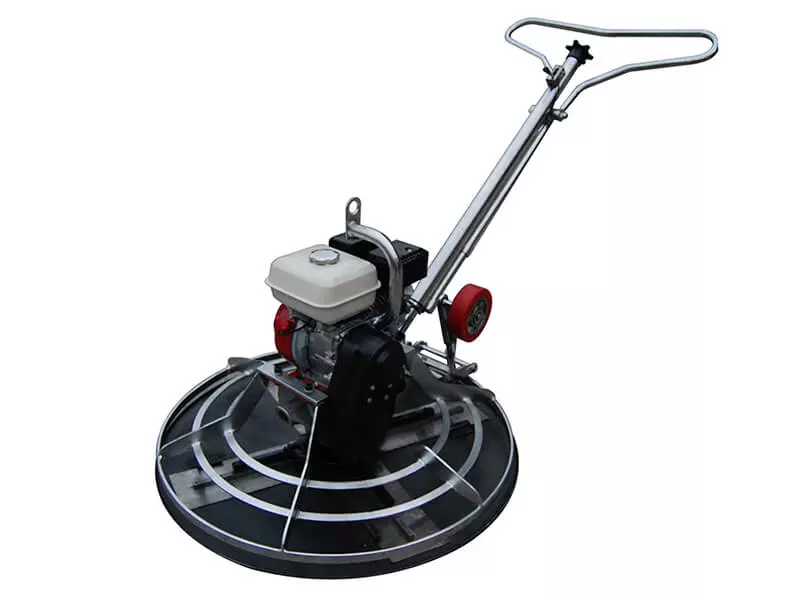
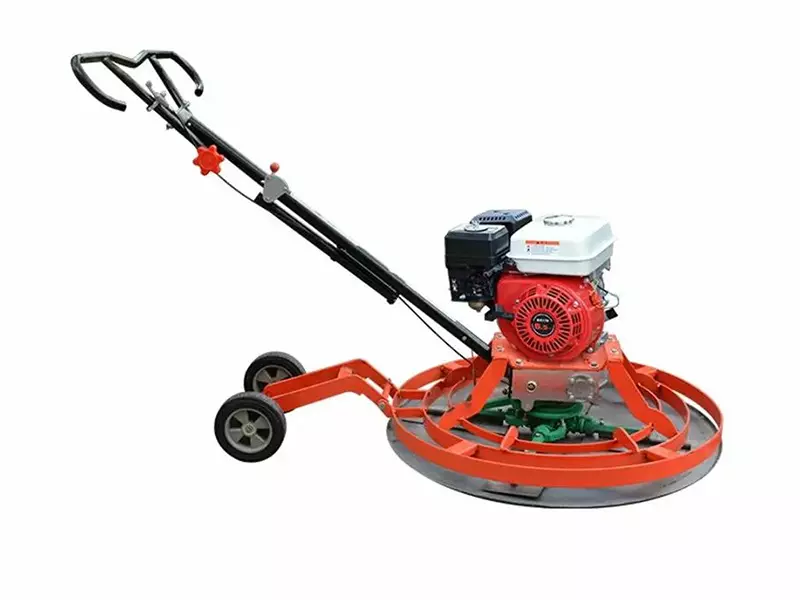
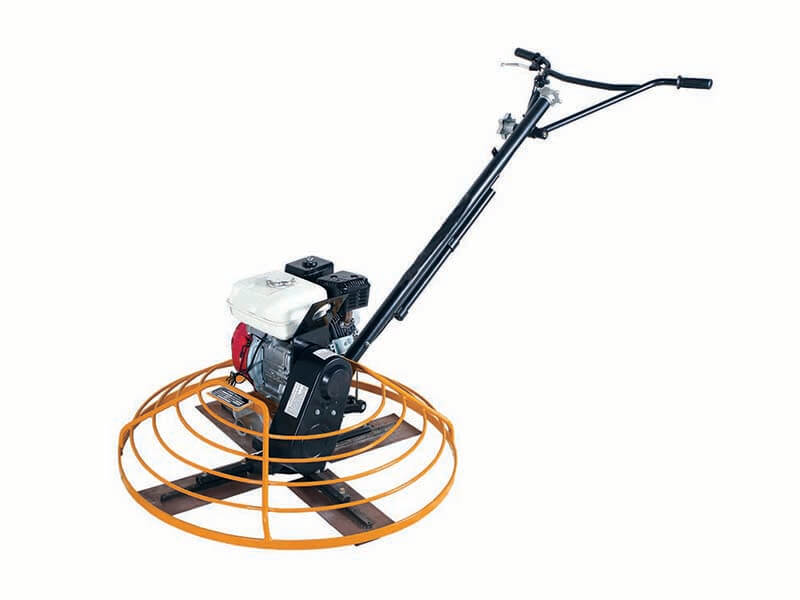
A concrete helicopter, also known as a power trowel, is designed to solve this problem. It gets its name from the rotating blades that resemble helicopter rotors as they glide over the concrete surface. Its main function is to smooth poured concrete, creating a dense and professional-quality finish in much less time than manual methods.
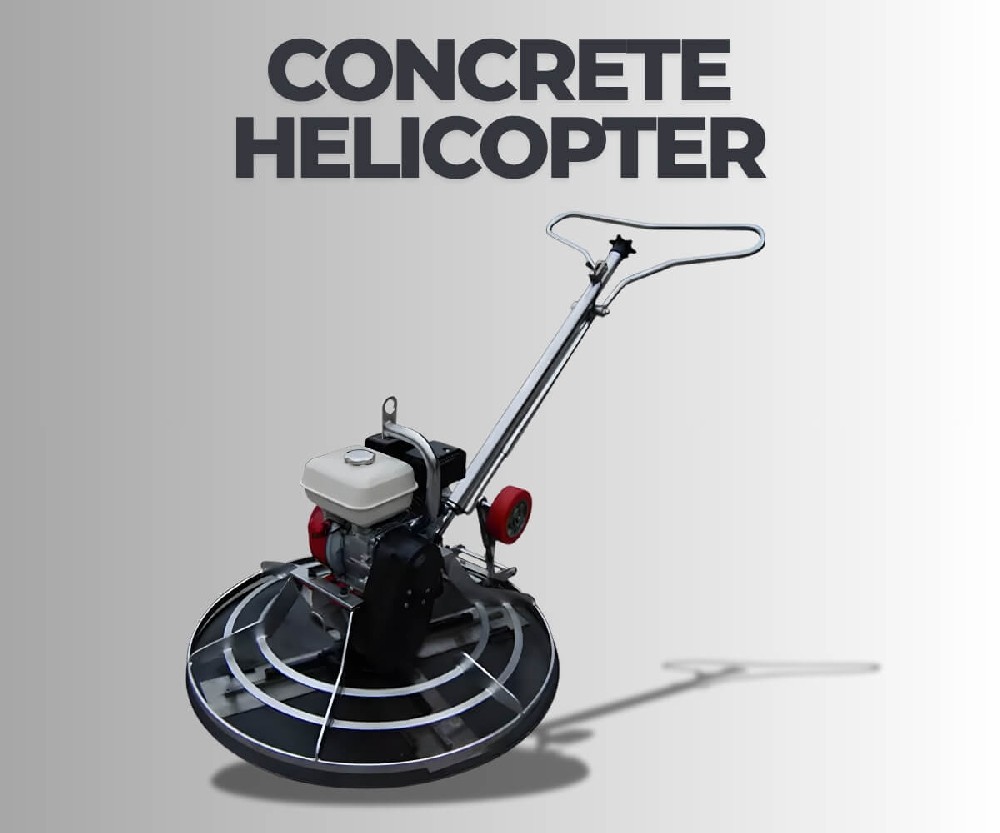
A concrete helicopter is construction equipment used to level and finish concrete surfaces. It consists of rotating blades mounted on a metal disc. As the disc spins at high speed, the blades smooth and compact the concrete. These concrete helicopter machines are widely used in construction projects such as buildings, bridges, and highways. They are easy to operate and require less manpower, making them suitable for both large and small projects.
A concrete helicopter consists of several key parts that work together to finish concrete smoothly and efficiently. The engine, which may be gas-powered or electric, provides the power to spin the blades. The rotor or spider assembly holds the trowel blades and ensures even rotation over the concrete surface.
There are two main types of trowel blades: float blades, used in the early stage to level and compact the surface, and finish blades, which create a smooth, polished finish. The pitch control allows the operator to adjust the blade angle to control finishing intensity. Safety guards protect the operator and nearby workers from the rotating blades.
Compared to hand finishing, a concrete helicopter is faster and more efficient, allowing large areas to be completed in a shorter time. It produces smoother and more even surfaces, ensuring consistent, high-quality results.
By reducing manual labor, it helps lower labor costs and operator fatigue. Proper compaction also strengthens the concrete surface, improving durability and reducing the risk of cracks over time. For professional concrete workers and construction teams, a concrete helicopter is a reliable tool for finishing large areas efficiently and consistently.
There are two main types of concrete helicopters: ride-on and walk-behind.
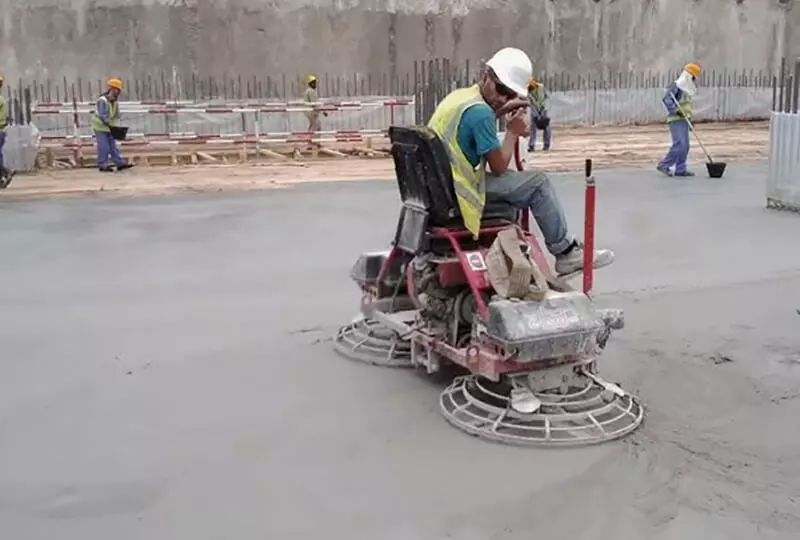
Ride-on concrete helicopters are operated by workers who sit on top of the machine and control movement using two joysticks. One joystick controls forward and backward movement, while the other allows forward, backward, and side-to-side movement through a crossover motion. Steering is simple but may take time to master.
These machines can be mechanically or electrically powered. Mechanical models use gasoline or diesel engines, while electric models rely on an external power source. Ride-on power trowels are larger machines designed for big floors such as warehouses, commercial buildings, and parking decks, with blade diameters typically ranging from 60 inches to over 96 inches for efficient coverage of large areas.
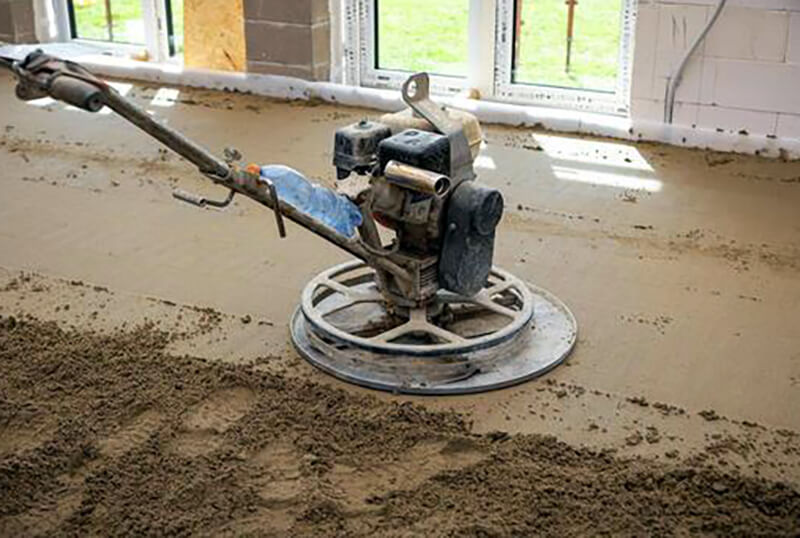
Walk-behind concrete helicopters are operated by a worker who walks behind the machine and guides it using the handle. The unit moves forward or backward by pushing or pulling the handle. Steering is controlled by adjusting handle pressure pulling the handle up moves the machine left, while pushing it down moves it right.
An alternative steering method involves placing one palm up and the other palm down on the handles and applying slight downward pressure to guide direction. Walk-behind power trowels are smaller machines suited for edges, small slabs, and tight spaces, with common blade diameters ranging from 24 inches to 48 inches.
By understanding the parts and selecting the appropriate type of concrete helicopter, construction teams can achieve faster, smoother, and more professional concrete finishes.
The waiting time between finishing concrete adjustments with a vibrating gauge and starting troweling depends on weather conditions and concrete formulation, especially the cement type. In general, it takes at least 2 to 3 hours before concrete is ready for helicopter finishing.
A concrete helicopter can be used once freshly poured concrete has enough load-bearing capacity to support a person and the machine. This stage is often called the “sweet spot.” Using it too early, when the concrete is still very wet, may cause surface tearing due to delamination.
One way to test readiness is the footprint test. If your footprint is about ¼ inch deep or less and has little or no water seepage, the concrete is ready to be finished. If the footprint is deeper than ½ inch or water appears, more waiting time is needed.
Another simple method is the finger test. Press your finger lightly on the concrete—if it leaves a shallow mark without sinking too deep, the surface is ready for troweling.
Start with float blades to remove small imperfections and bring cement paste to the surface. Move the machine slowly using overlapping passes to cover the entire slab evenly. Floating prepares the concrete for the final finishing stage.
After using the power trowel pan, switch to smoothing or finishing blades (steel dressing blades). Several passes are required, gradually increasing the blade pitch to work the surface more aggressively until a closed surface is obtained. Avoid excessive finishing, as overuse of steel blades may cause brown or “burned” surface marks.
Make overlapping passes with the concrete helicopter so each pass slightly covers the previous one, preventing lines or uneven areas.
Edge work is essential since large trowels cannot reach corners and tight edges. Use a smaller walk-behind trowel or hand tools to finish these areas for a clean, professional look.
Blade pitch can be adjusted depending on the task: a low pitch is used for floating, while a higher pitch is used for finishing. Blade speed also affects the result—slower speeds are used for floating, while faster speeds produce a harder, shinier finish.
Starting too early, which can cause pitting and uneven surfaces
Troweling concrete that is too dry, which may lead to flaking or cracking
Staying in one spot too long, which can create dark or “burned” marks
Safe operation of a concrete helicopter is very important. Always observe the following precautions:
Operate the machine on a flat, level surface.
Never use it near fresh vertical concrete or walls without proper guards.
Transport the machine in an upright position.
Remove debris such as bricks, stones, glass, rope, or sharp objects from the work area.
Hold the handle firmly while the machine is running.
Be aware that prolonged use may cause unnecessary vibration.
Always wear personal protective equipment (PPE), including hearing protection, safety boots, and gloves.
Make sure you know how to shut down the machine quickly in an emergency.
By following these steps and safety guidelines, construction teams can use a concrete helicopter efficiently to save time, reduce labor, and achieve a strong, smooth, and professional-quality concrete surface.
Even when using a concrete helicopter, issues can still occur. Knowing how to identify and fix them helps ensure smooth operation and safe, professional results.
Blades not spinning properly: If the trowel blades are not rotating correctly, inspect the drive belts and gearbox. Make sure the belts are properly tightened and in good condition, and check the gearbox for damage or loose connections.
Uneven or rough finish: An uneven concrete surface usually means the blade pitch is incorrect or the blades are worn. Adjust the blade pitch to suit the task and replace any damaged or blunt blades.
Engine problems: If the engine fails to start or runs poorly, check the fuel level, oil, and spark plugs. For electric models, inspect the motor connections and power supply. Regular maintenance helps reduce these problems.
Preventing common problems
Keeping the concrete helicopter well maintained and addressing issues early helps achieve a smooth, professional finish on every concrete slab.
Proper maintenance after each job ensures the concrete helicopter remains in good working condition for a long time:
Clean the machine: Remove all concrete from the blades, spider assembly, and guard ring immediately after use to prevent buildup.
Check the engine: Regularly inspect and change the engine oil and filters to keep the engine running smoothly.
Proper storage: Store the machine in a clean, dry place to protect it from rust and damage.
Following these maintenance tips helps keep the concrete helicopter in top condition for many projects.
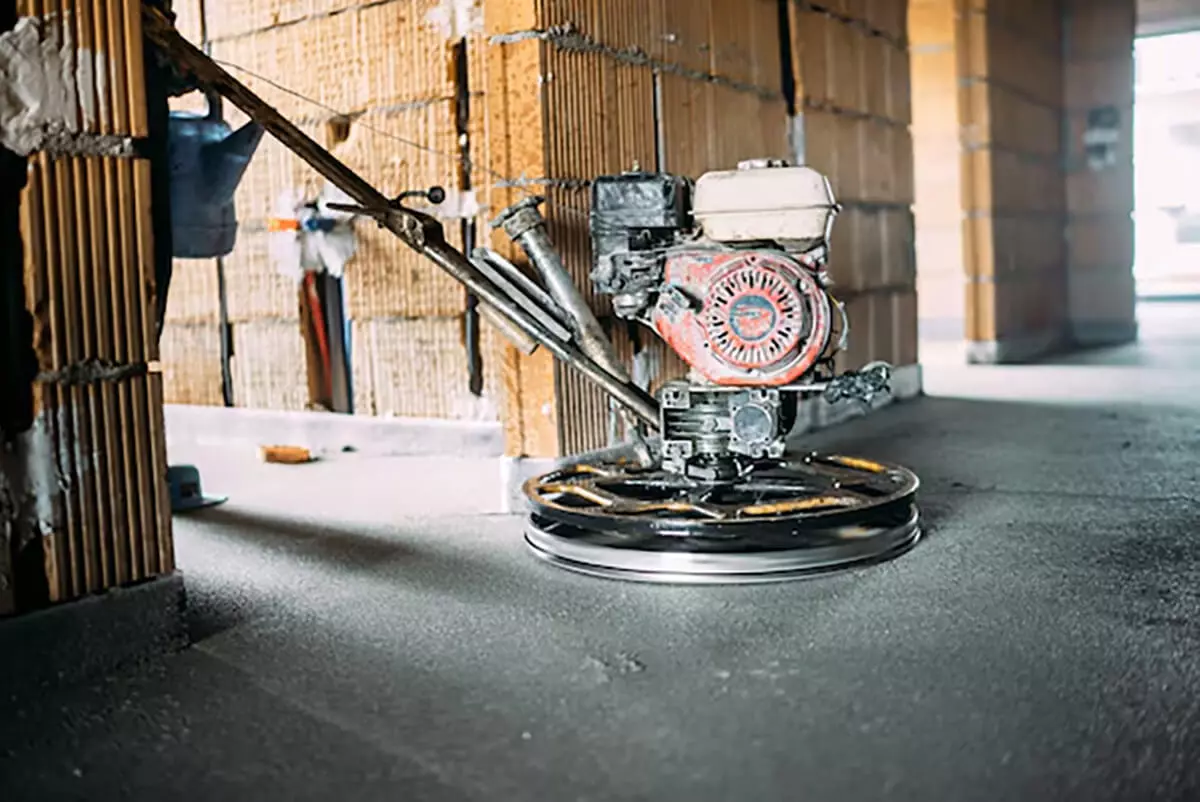
Concrete helicopters common used in a wide range of concrete projects:
Residential projects: Ideal for floors, patios, and other home surfaces, helping achieve smooth, even finishes quickly.
Industrial and commercial construction: Perfect for large slabs in warehouses, factories, parking lots, and similar areas where manual finishing would be time-consuming.
Infrastructure projects: Used for airport runways and other extensive flat surfaces, ensuring strong, level, and durable concrete capable of handling heavy traffic.
Decorative concrete: Suitable for polished floors or textured surfaces where a uniform and professional finish is required for both strength and appearance.
Overall, the concrete helicopter is essential for any project that demands a smooth, durable, and professional-quality concrete finish.
The concrete helicopter is a powerful tool that transforms rough, freshly poured concrete into smooth, strong, and attractive surfaces. With proper timing, careful blade pitch adjustment, and attentive operation, it helps construction teams achieve professional-quality results on every slab, whether large or small.
For anyone looking to save time, reduce labor, and achieve consistent, durable concrete finishes, a reliable concrete helicopter is essential. Equipment quality should never be compromised—cheap machines often fail and end up costing more in the long run.
Choose the BISON brand for a machine that combines quality, efficiency, and ease of use, making every concrete project smoother and easier. BISON concrete helicopter uses only the highest-quality materials, ensuring machines built to last. Avoid low-quality machines with copper-clad iron worm gears—they may work for light-duty tasks but will disappoint in professional or heavy-duty use. True BISON concrete helicopter reliability is what every trade professional needs.
inquiry form here
BISON BLOG, All the latest news and views from Bison Machinery.
what's hot?
Related Articles
Trowel machines: Introduction, types, working mechanism and buying guide how to achieve a professional finish with a power float power trowel manufacturer list what equipment do you need to pour a concrete sidewalk the complete guide to concrete helicopterRelated Products