27Nov 2025
table of contents
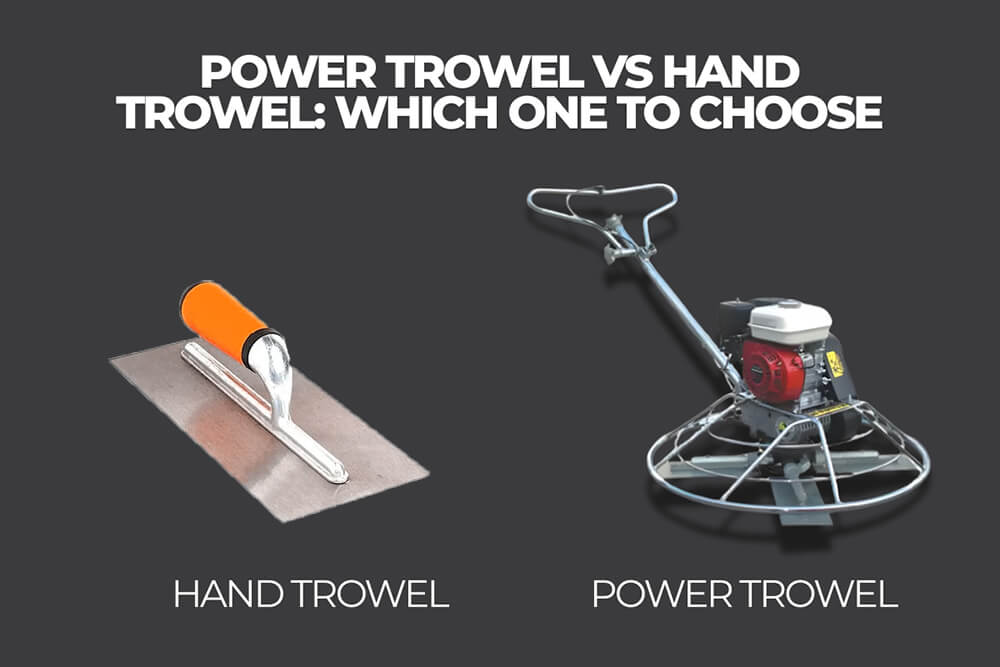
You’ve poured the concrete for your new patio, and while it’s starting to set, the real work begins. Achieving a smooth, durable, professional-looking surface requires proper troweling. Choosing between a power trowel and a hand trowel depends on project size, desired finish, budget, and labor requirements.
Both tools level, compact, and smooth freshly placed concrete, but they differ in functionality, performance, and results. This article explains these differences to help you select the best trowel for your project.
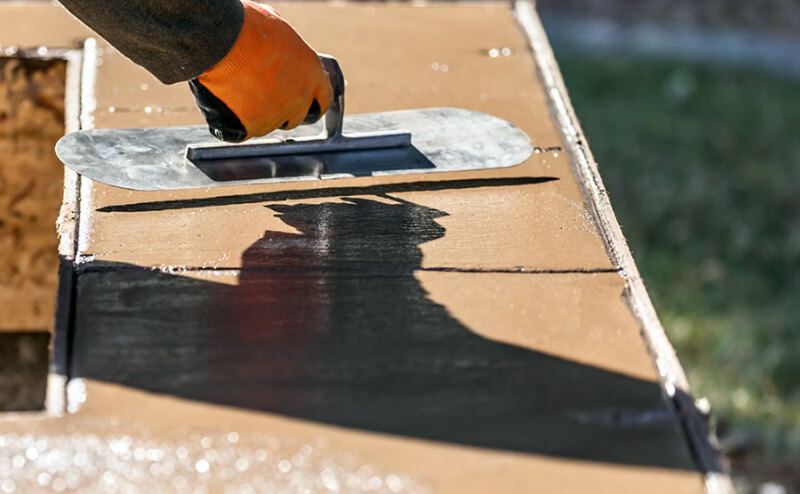
A hand trowel is a small, manually operated tool used to smooth, level, and finish concrete surfaces. It provides precise control and a smooth finish, making it essential for detail-oriented masonry and concrete work. Both professional contractors and diy builders rely on hand trowels for finishing and repair tasks.
Unlike power trowels, which are motorized for large slabs, hand trowels depend entirely on human effort.
Despite being traditional, hand trowels offer several advantages:
Unparalleled precision: complete control over movement, pressure, and direction allows for detailed finishing.
Low cost: inexpensive to purchase and maintain, ideal for small contractors or homeowners.
Portability: small and lightweight, convenient for tight job sites and easy to transport.
No power required: can be used anywhere, including remote locations without electricity or fuel.
Versatile applications: suitable for concrete, plaster, mortar, and decorative finishes.
Perfect for small projects: ideal for small slabs, stairs, or touch-ups without heavy machinery.
Hand trowels have drawbacks for larger or time-sensitive projects:
Labor-intensive: requires significant physical effort, leading to fatigue on large surfaces.
Slower process: much slower than mechanical finishing, reducing productivity on large jobs.
Uneven finish on large areas: difficult to maintain uniformity without machinery.
Limited efficiency: best for areas under 200–300 square feet; larger areas increase time and labor costs.
Operator-dependent: finish quality relies heavily on the user’s skill and technique.
A hand trowel consists of several key components that work together to deliver a precise and efficient finish:
Made of stainless steel, carbon steel, or blue steel.
Typically 10–16 inches long and 4–6 inches wide, depending on type and use.
Slight flexibility allows even pressure distribution for a uniform finish.
Constructed from plastic, rubber, or wood for comfort and a secure grip.
Ergonomic designs reduce hand fatigue and improve control during extended use.
Connects the blade to the handle and absorbs applied pressure.
High-quality trowels feature reinforced shanks to prevent bending.
Round edges prevent gouging or unwanted marks.
Square edges create sharp, defined finishes where needed.
While ""Hand trowel"" often refers to a finishing trowel, several types are used depending on the task:
Finishing trowel: standard tool for smoothing and polishing concrete after floating; provides a dense, compact finish.
Margin trowel: narrow and rectangular; ideal for edges, corners, and tight spaces.
Pointing trowel: small and pointed; used for detail work, patching cracks, or filling small gaps.
Pool trowel: similar to a finishing trowel but with rounded edges to prevent marks; commonly used for pools and decorative slabs.
Corner trowel: shaped for finishing inside or outside corners for clean, continuous edges.
Hand trowels are used in the final stages of concrete finishing, after floating and once bleed water has evaporated.
Preparation: the surface should be workable but firm enough to withstand light pressure.
First pass: hold the trowel at a low angle (~15°) and apply light pressure to smooth minor imperfections and slightly compact the surface.
Intermediate passes: gradually increase the angle and pressure as the concrete sets to build a denser, smoother surface.
Final pass: use higher pressure and a steeper angle (~25–30°) to seal the surface and achieve a polished, professional finish.
Hand troweling requires skill, patience, and precision, making it both an art and a practical technique in concrete finishing.
A hand trowel is most effective when precision and control matter more than speed:
Small-scale projects: patios, sidewalks, driveways, and small residential lots.
Narrow or confined areas: corners, edges, and spaces machines cannot reach.
Detailing or decorative work: textured, patterned, or artistic concrete finishes.
Repairs and touch-ups: patching cracks, smoothing small uneven spots, or finishing edges after a power trowel.
Budget-conscious jobs: cost-effective for small projects.
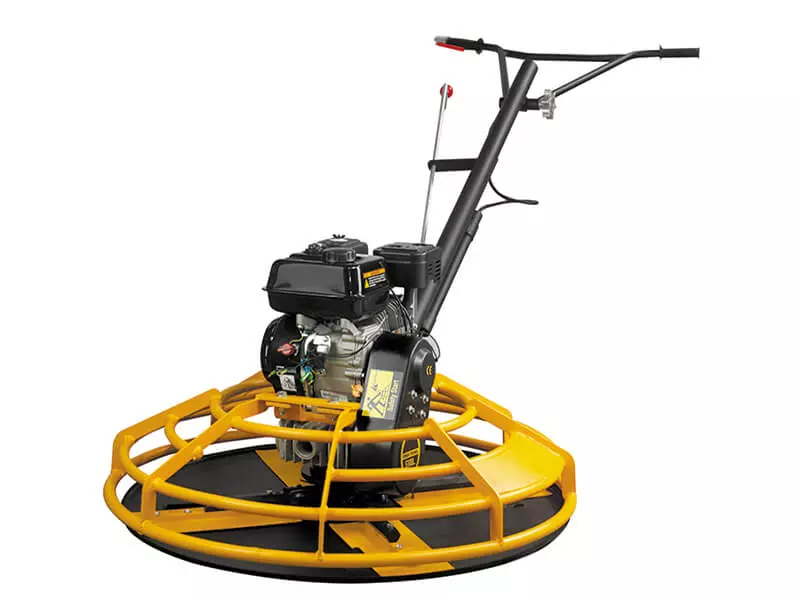
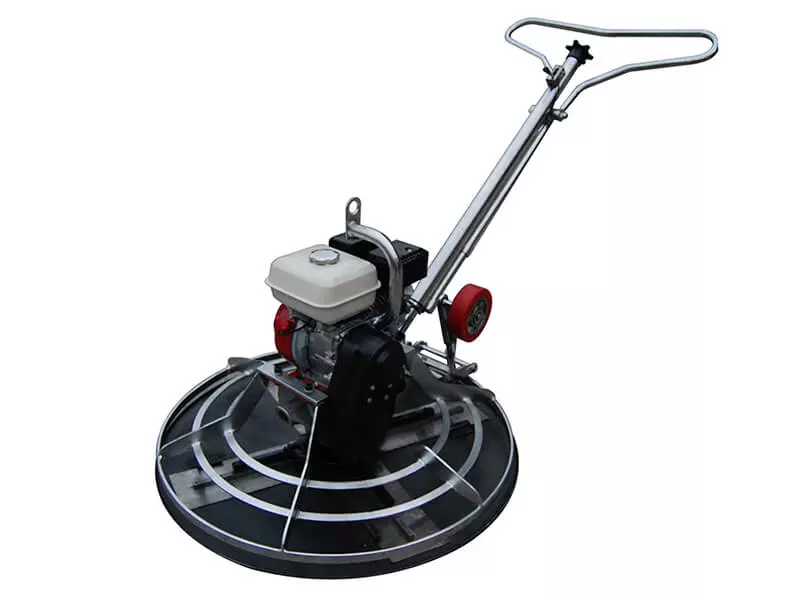
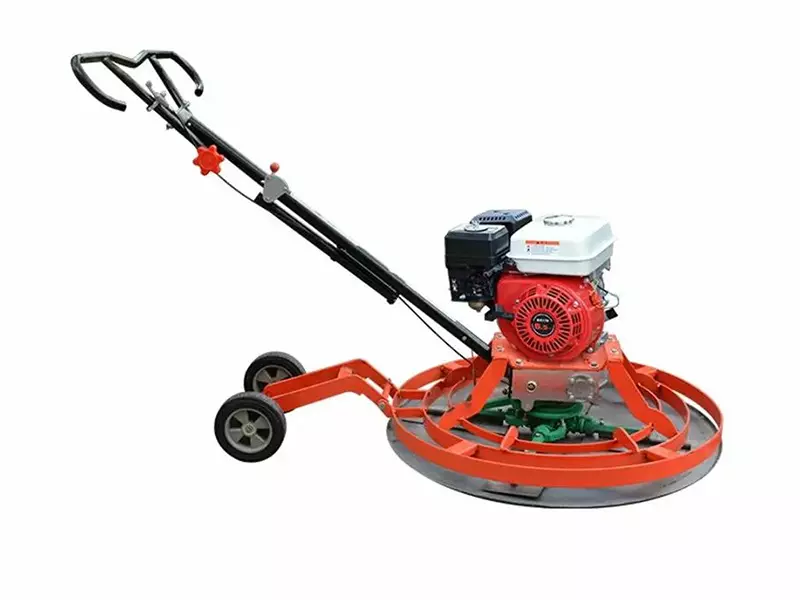
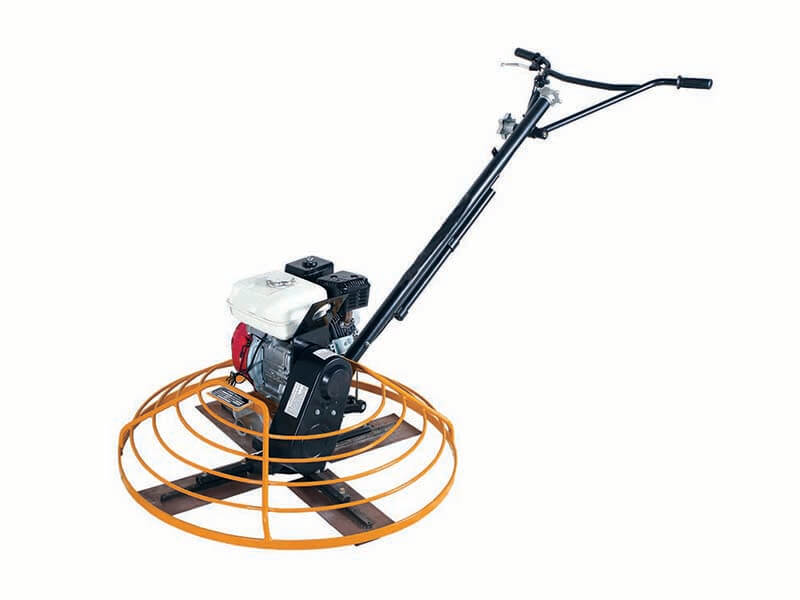
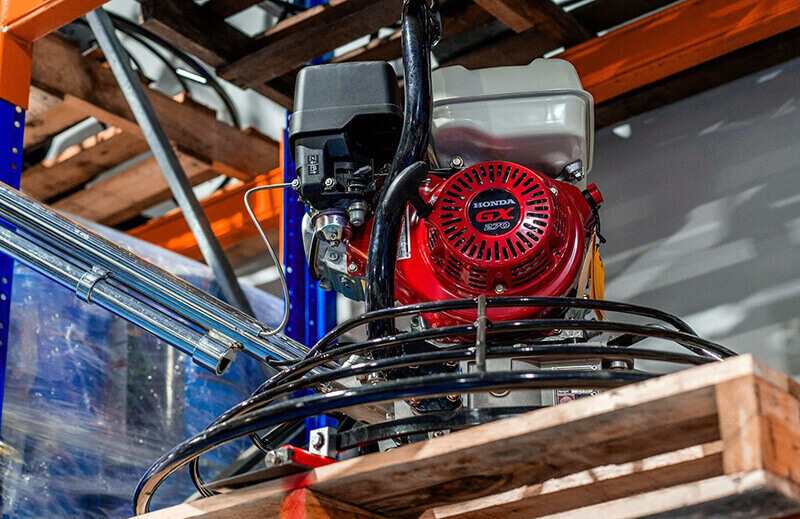
A power trowel, also called a mechanical trowel or power float, is a motor-driven machine with rotating steel blades designed to smooth and finish large concrete surfaces. Like a hand trowel, it levels, compacts, and polishes the concrete, but it works much faster and covers larger areas, making it a favorite among professionals.
Power trowels are essential in commercial, industrial, and large-scale residential projects, producing smooth, densely compacted surfaces that improve durability, wear resistance, and structural integrity.
Power trowels offer advantages that make them indispensable for professional contractors:
Efficiency and speed: a single operator can finish thousands of square feet per day, far faster than manual troweling.
Consistent finish quality: rotating blades apply uniform pressure for an even surface across the slab.
Improved durability: compaction reduces surface porosity, producing stronger, longer-lasting concrete.
Labor savings: reduces physical strain and manpower compared to hand troweling.
Adaptability: adjustable blade pitch and speed allow finishes ranging from matte to glossy.
Professional appearance: delivers a clean, polished look for commercial or decorative concrete.
High initial cost: prices range from $1,000 to $5,000 depending on size and brand.
Maintenance requirements: engines, blades, and gearboxes require regular servicing.
Dependence on fuel or electricity: gas or electric models need a consistent power source, limiting use in remote areas.
Not suitable for tight spaces: too large for edges, corners, or confined areas.
Skill required: improper use can cause overtrolling, surface cracking, or uneven finishes; operator training is essential.
A power trowel is designed for efficiency and precision. While designs vary by manufacturer, most models include these key components:
Engine or motor: The power source driving the blades; can be gasoline, diesel, or electric depending on site conditions.
Troweling blades: The rotating blades perform the work:
Floating blades: For initial smoothing and leveling.
Finishing blades: For final polishing and hardening.
Compound blades: Handle both stages.
Blade pitch bontrol: Adjusts the blade angle; low pitch for initial passes, high pitch for a dense, shiny finish.
Safety cage or guard ring: Protects the operator and prevents damage from obstacles.
Handlebar or operator platform: Walk-behind models use adjustable handlebars, while ride-on versions feature seats and control levers for less fatigue.
Throttle and speed control: Adjusts rotation speed to match surface conditions and finishing stages.
Walk-behind power trowel: the operator walks behind the machine, guiding it over medium-sized areas.
Ride-on power trowel: the operator sits on the machine, ideal for large slabs and extensive projects.
A power trowel is most effective for:
Large surfaces such as warehouses, industrial floors, and parking decks.
Projects requiring high productivity and tight deadlines.
Applications needing a durable, smooth finish that resists wear.
Commercial or professional jobs where appearance and strength are important.
When deciding which trowel to use, consider these key factors:
Project size and jobsite conditions: small patios, walkways, corners, and compact or sensitive sites are best with a hand trowel, while large slabs and wide, open areas are faster with a power trowel.
Desired finish quality: power trowels deliver flat, dense, polished surfaces ideal for industrial floors, while hand trowels offer precise control for edges, corners, decorative, or textured finishes.
Budget constraints: hand trowels are inexpensive and low-maintenance. Power trowels cost more but are worthwhile for large, frequent projects; rental is an option for occasional use.
Timeframe: hand trowels take longer, especially on large areas, but are quick for small jobs. Power trowels finish large areas up to 20 times faster, saving time and effort.
Worker experience: hand trowels are beginner-friendly. Power trowels require training to avoid uneven finishes, grooving, or accidents.
Job site accessibility: hand trowels handle tight corners, edges, steps, and confined spaces. Power trowels are suited for open, wide areas.
Long-term use and maintenance: hand trowels require minimal maintenance and are flexible for different tasks. Power trowels need regular upkeep but excel at large-scale projects.
By weighing these factors, you can select the tool that fits your project size, finish requirements, budget, and team skills. BISON power trowels provide reliable performance, whether you choose the precision of a hand trowel or the speed of a power trowel.
Both tools play an important role in concrete finishing:
Use a power trowel for large slabs, speed, and uniformity, especially when professional equipment and training are available.
Use a hand trowel for small or detailed jobs, precise control, or budget-conscious projects.
Combine both on large projects: power trowels handle the main slab, while hand trowels finish edges and details, delivering efficiency and precision for high-quality results."
Yes, but it requires skill and multiple passes. A power trowel gives a faster, smoother finish.
Begin when the surface can support weight but is still wet, usually after the initial setting.
It’s possible but overkill. A hand trowel is more practical for small areas.
A ride-on power trowel works best for large commercial projects.
Hand troweling small slabs can take hours, while a power trowel can finish large areas in under an hour."
Choosing between a power trowel and a hand trowel depends on project size, budget, and desired finish. Power trowels excel on large slabs, offering speed, uniformity, and professional-grade smoothness. Hand trowels are ideal for small-scale or detailed work, providing control, precision, and cost-efficiency. Often, the best results come from combining both: a power trowel for the main slab and a hand trowel for edges and fine detailing.
No matter the tool, the goal is the same—a smooth, durable, and high-quality concrete surface. For reliable professional results, explore BISON’s range of hand and power trowels to make your next project faster, easier, and more precise.
inquiry form here
BISON BLOG, All the latest news and views from Bison Machinery.
what's hot?
Related Articles
Trowel machines: Introduction, types, working mechanism and buying guide how to achieve a professional finish with a power float power trowel manufacturer list what equipment do you need to pour a concrete sidewalk the complete guide to concrete helicopterRelated Products