05Sep 2025
table of contents
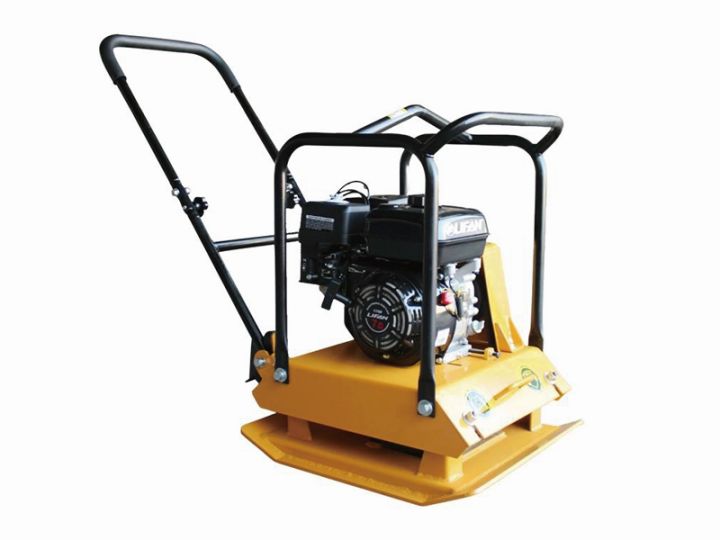
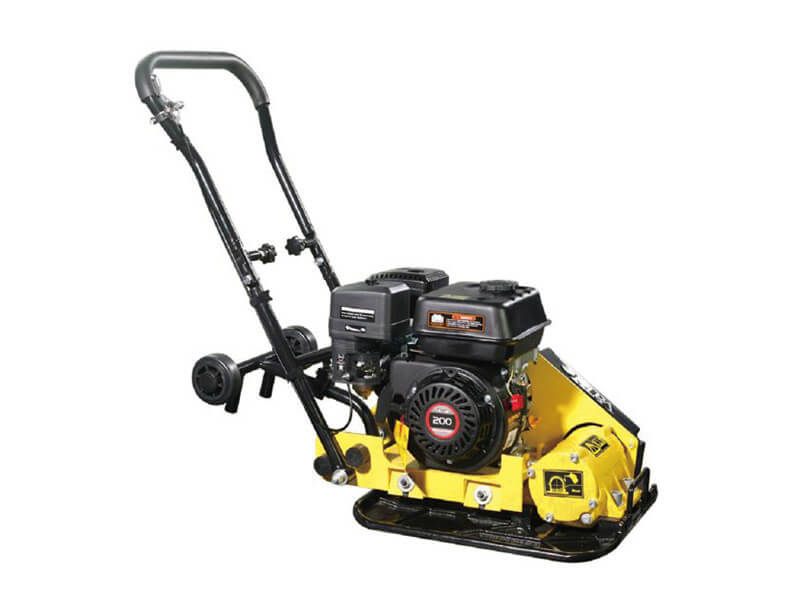
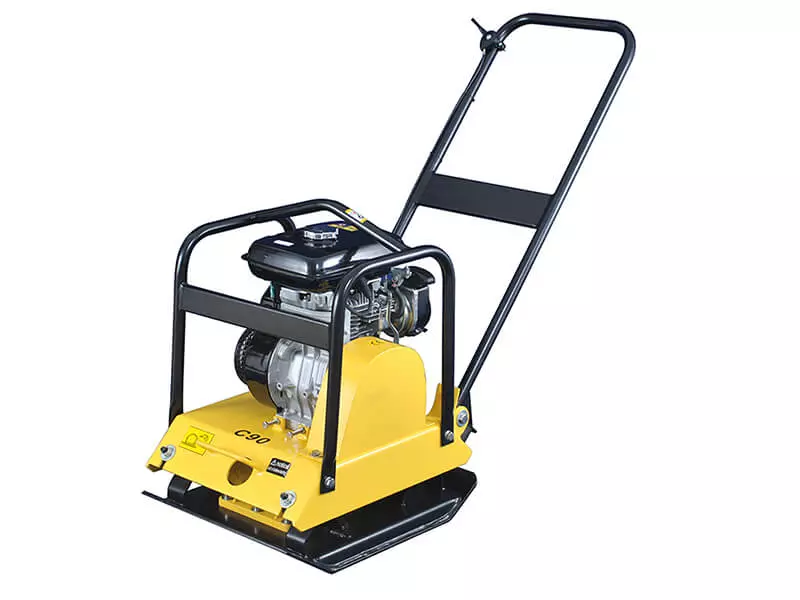
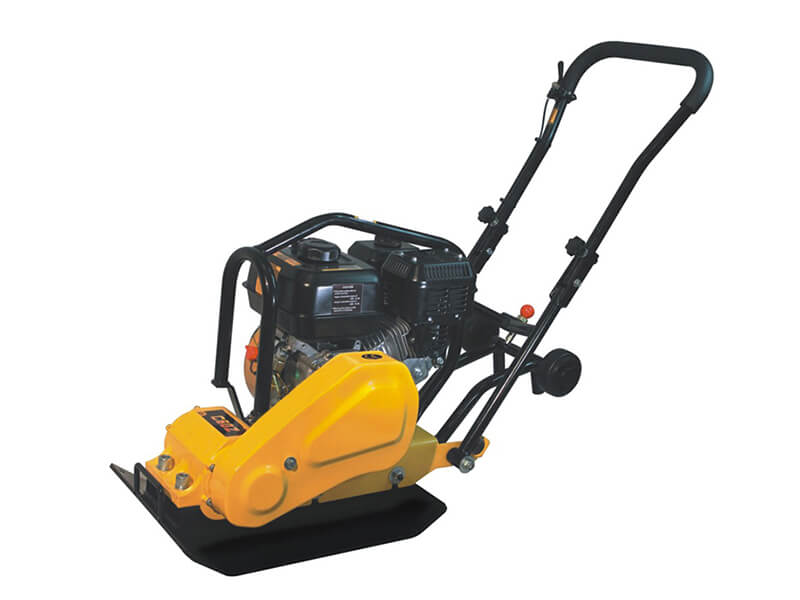
A plate compactor is an essential piece of equipment used in construction, landscaping, and various other industries to compact soil, gravel, sand, and similar materials. It delivers the necessary force to create a solid, stable base for roads, foundations, and other structures.
One of the most important components of a plate compactor is its drive belt. This belt connects the engine to the vibrating plate, powering the compaction mechanism. Over time and with regular use, the belt can become loose or worn, which reduces efficiency and may lead to bigger mechanical issues if left unchecked.
In this article, BISON will guide you through how to safely tighten the drive belt on your plate compactor. Following these simple steps will help your machine work more efficiently, last longer, and avoid unnecessary downtime.
Engine Pulley: This pulley is connected directly to the engine and rotates when the engine runs. It powers the drive belt and transfers energy to the rest of the system.
Compactor Pulley: Attached to the vibrating plate of the compactor, this pulley works with the engine pulley to transfer power, enabling the plate to vibrate and compact the surface effectively.
Drive Belt: The drive belt connects the engine pulley to the compactor pulley, carrying power from the engine to the vibrating plate. It's essential to keep the belt in good condition and properly tensioned to prevent slipping or damage.
Tensioning Mechanism: This mechanism adjusts the tightness of the drive belt. Correct belt tension is crucial: if the belt is too loose, it won't transmit power properly; if it’s too tight, it can cause unnecessary wear or damage to the machine.
V-Belts: Recognized for their classic “V” shape, these belts are the standard choice for plate compactors. Their shape provides a strong grip on pulleys, minimizing slippage and ensuring smooth operation. V-belts are durable and built to withstand heavy-duty use, making them ideal for demanding compaction tasks.
Cogged Belts: Designed with grooves along the belt's surface, cogged belts offer increased flexibility and reduced friction. This design makes them bend more easily around pulleys and handle heavy loads efficiently. Cogged belts deliver smooth, reliable performance, especially in challenging working conditions.
Whether you prefer the dependable strength of V-belts or the added flexibility of cogged belts, BISON plate compactor suppliers offers a wide selection of high-quality belts to keep your plate compactor running at peak performance. Count on us to supply the best options for your equipment needs.
Maintaining proper belt tension is crucial for the performance and longevity of your plate compactor. Here's why keeping the belt tight is so important:
A loose belt can slip during operation, causing screeching noises and poor power transfer. This not only reduces efficiency but also signals that the belt isn't functioning properly. Tightening the belt stops slipping and eliminates unwanted noise.
Correct belt tension ensures the vibrating plate gets full power from the engine. If the belt is loose, the plate won't deliver the needed force, leading to poor compaction and uneven surfaces. Proper tension lets your compactor perform at its best.
A loose belt increases friction and puts extra strain on the engine, pulleys, and other drive components, leading to premature wear or damage. Keeping the belt tight minimizes this stress and helps parts last longer.
When the belt is properly tensioned, the engine transfers power smoothly without working harder than necessary. A slipping belt forces the engine to compensate, using more fuel. Correct tension helps your compactor run efficiently and saves on fuel costs.
Slipping belts generate excess friction and heat, which can cause the engine or drive system to overheat and fail. Tightening the belt reduces unnecessary friction, helping the machine run at safe operating temperatures.
A loose belt on a plate compactor might not show obvious problems at first, but recognizing early warning signs can help you prevent damage and downtime. Here are the most common signs that your belt may need tightening:
One of the clearest signs is a screeching or squealing noise during operation. This happens when the belt loses its grip on the pulleys and slips while transferring power. If you hear these sounds often, it's time to check and tighten the belt.
A loose belt reduces the power delivered to the vibrating plate, resulting in weaker vibration and poor compaction. If the machine struggles to compact properly or leaves uneven surfaces, the belt may need tightening to restore full performance.
A properly tensioned belt helps the compactor produce steady, consistent vibration. A loose belt can cause irregular or erratic vibrations, leading to uneven compaction and a rough operating experience. Tightening the belt can fix this and return the machine to smooth operation.
Extra friction from a slipping belt can overheat the belt and surrounding parts, causing unnecessary wear and possible engine stress. If you notice the machine overheating or needing repairs more often than usual, check the belt tension—it may be the cause.
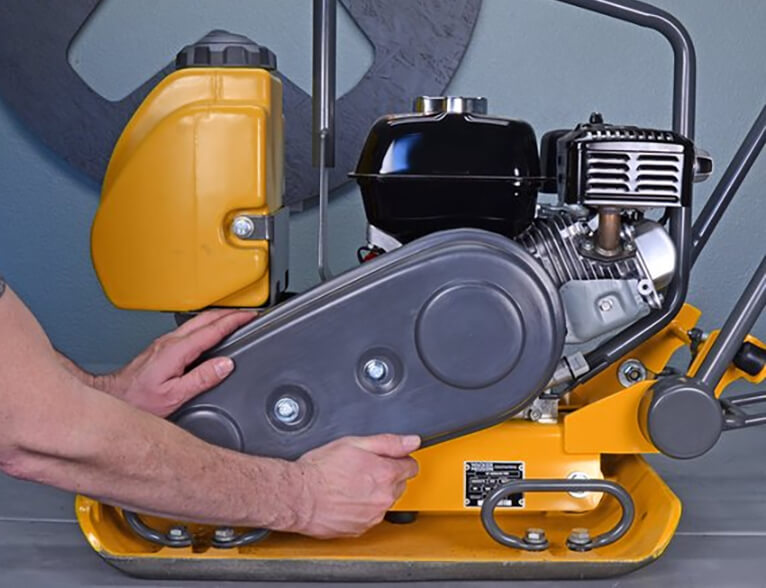
Proper belt tension is crucial for your plate compactor's performance and durability. Follow these clear steps to safely tighten the belt:
Locate the belt housing: The belt housing is usually on the side or underside of the compactor. Look for a cover protecting the belt and pulleys.
Open the housing: Use a wrench or screwdriver to remove any screws or bolts securing the cover. Carefully lift it off to expose the belt system.
Before adjusting, check the belt for damage:
Cracks or fraying: Replace the belt if you see cracks or frayed edges.
Excessive wear: Look for thinning, especially in the grooves.
Misalignment: Ensure the belt lines up correctly with both pulleys.
If you find severe damage, replace the belt instead of tightening it.
Find the tensioning parts: This is usually near the engine or pulleys and may include bolts, a sliding engine base, or a tensioner pulley.
Loosen the locking bolts: Loosen (but don't remove) the bolts or nuts that hold the tensioner in place so you can adjust the belt.
Use one of these methods, depending on your compactor model:
Loosen the engine base bolts.
Slide the engine towards the pulleys to tighten the belt.
Once tight, secure the bolts.
Loosen the pulley's bolts or nuts.
Move the pulley to adjust belt tension.
Tighten the bolts to lock the pulley.
Loosen the adjustment bolts.
Turn the screws to increase or decrease tension.
Once adjusted, retighten the bolts.
Thumb pressure test: Press the middle of the belt with your thumb. It should move slightly, about half an inch (1.27 cm). Too much slack means it's loose; no movement means it’s too tight.
Tension gauge (optional): If you have a tension gauge, follow the manufacturer's instructions to measure and adjust the belt to the recommended tension.
Tighten all bolts: After adjusting, make sure all bolts and screws are fully tightened to hold the belt in place.
Confirm belt alignment: Check that the belt runs straight along the pulleys to avoid wear and slipping.
Test operation: Rotate the pulleys by hand or start the engine briefly to ensure smooth movement and no unusual noises.
Recheck after use: Run the compactor for a few minutes, shut it off, and check the belt again. Adjust if needed to maintain proper tension.
Check the belt often for signs of wear, cracks, or fraying. If you spot any damage, replace the belt promptly to avoid unexpected breakdowns.
Dirt and debris can speed up belt wear. Wipe the belt clean using a soft cloth or brush to prevent buildup that could affect performance.
Yes. You can adjust the belt tension by loosening the tensioner or adjustment bolts, moving the tensioning mechanism or engine to tighten the belt, and then securely tightening everything back in place.
The belt should be snug but not overly tight. When you press down on the middle of the belt, it should have about 1/2 to 1 inch (1.2 to 2.5 cm) of slack.
Check the belt tension every 100–200 operating hours, or sooner if you notice signs like slipping, squealing, or a drop in performance.
Proper belt tension is essential for keeping your plate compactor running smoothly and efficiently. A correctly tightened belt ensures your machine operates at full power, reduces the risk of slipping, power loss, and premature wear, and extends the life of key components. By following the steps in this guide — accessing the belt, inspecting for wear, locating the tensioning mechanism, and using the appropriate tightening method — you can maintain optimal performance with confidence.
Always follow safety procedures before performing any maintenance: shut off the engine, disconnect the power source, and wear the right personal protective equipment (PPE). Regular inspections and timely adjustments will prevent future problems and keep your compactor in top shape. A good habit is to clean the belt after each use and check for damage.
As a professional plate compactor manufacturer in China, BISON are committed to providing high-quality products and practical maintenance advice. If you have any questions or need further support, please feel free to contact us — we're here to help keep your projects running smoothly!
inquiry form here
BISON BLOG, All the latest news and views from Bison Machinery.
what's hot?
Related Articles
Everything you need to know about plate compactor what is a plate compactor? everything you should know about soil compactors how to tighten belt on plate compactor how to choose the right vibratory plate compactorRelated Products