20Oct 2025
table of contents
Nothing ruins a camping trip faster than running out of power—whether it's the lights going out in the middle of dinner, food spoiling in a warm fridge, or your phone dying far from home. That's why a reliable generator is one of the most important tools to bring along. From powering lights and cooking gear to keeping electronics charged, the right generator ensures comfort and convenience outdoors.
At BISON, a professional generator manufacturer in China, we understand how vital a dependable power source is for campers who value both reliability and efficiency. A camping generator not only adds comfort but also enhances safety during your trip.
This brings us to a common question many campers face: for camping, which is better—propane or gasoline generators?
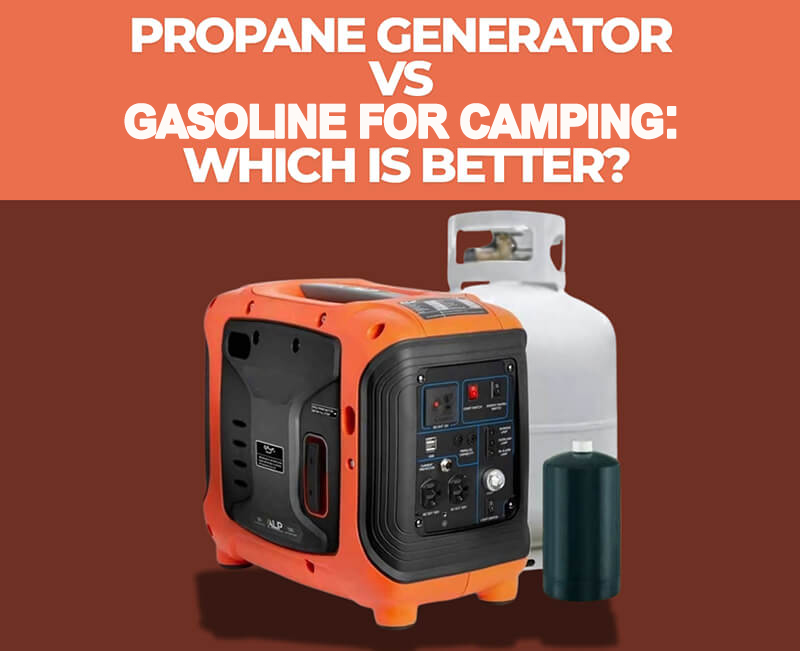
Camping generators are portable machines that supply electricity when you're away from traditional power sources. Unlike batteries that drain quickly, generators can keep your essential gear running for the entire trip. Typical uses include charging phones, keeping food fresh in portable coolers, powering small heaters or fans for comfort, and even running rv systems, lights, or cooking appliances.
Before deciding whether propane or gasoline is better for camping, it's important to understand how each fuel type works and what it offers. Your choice of fuel has a major impact on convenience, storage, cost, maintenance, and overall performance. By choosing wisely, you can ensure steady power throughout your adventure without the worry of shortages or unnecessary hassles.
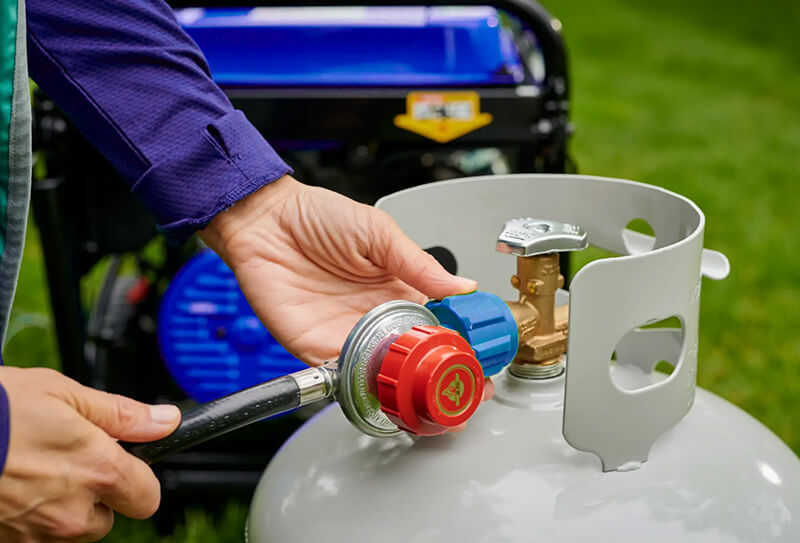
Propane generators run on liquefied propane gas (lpg) supplied from a connected tank. When the generator operates, propane is released, vaporized, and burned to create mechanical energy, which is then converted into electricity to power your appliances and devices. Many campers value propane because it burns cleaner and more efficiently than gasoline, offering a reliable and eco-friendlier option for outdoor power.
Cleaner burning: produces fewer emissions and less carbon buildup, which reduces maintenance needs and extends service intervals—ideal for campers who don't run their generator every week.
Excellent fuel storage: propane has an indefinite shelf life when stored in sealed tanks, unlike gasoline that degrades over time.
Quieter operation: often runs a few decibels lower than comparable gasoline models, making them more campsite-friendly.
Safer to store: tanks are sealed, weather-resistant, and less prone to spills, provided they're kept upright and inspected for damage or rust.
Lower energy density: propane won't run as long as gasoline on the same volume of fuel.
Bulkier fuel tanks: cylinders can be less convenient to carry and take up more storage space.
Availability issues in remote areas: while many campgrounds, rv parks, and hardware stores sell or refill propane, it may be harder to find off the beaten path. Planning ahead with full tanks or spares is essential.
Higher upfront cost: propane generators are usually priced higher than gasoline models, and propane is slightly more expensive per unit of energy, though its pricing tends to be more stable.
If you value clean operation, long-term fuel storage, and quieter performance, a propane generator is an excellent choice. They're especially useful for campers who plan ahead, have room for fuel tanks, or frequent areas where propane is easy to find.
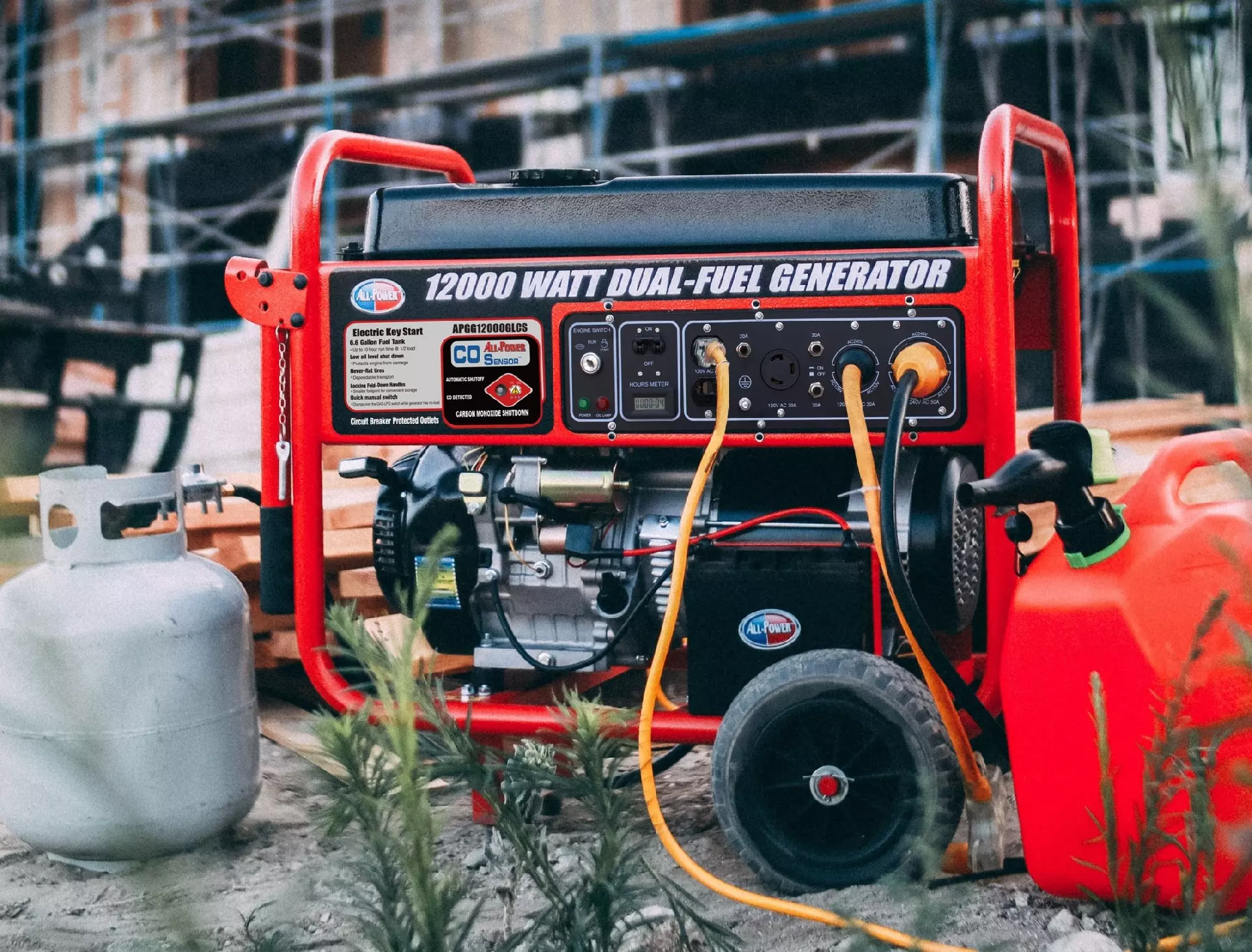
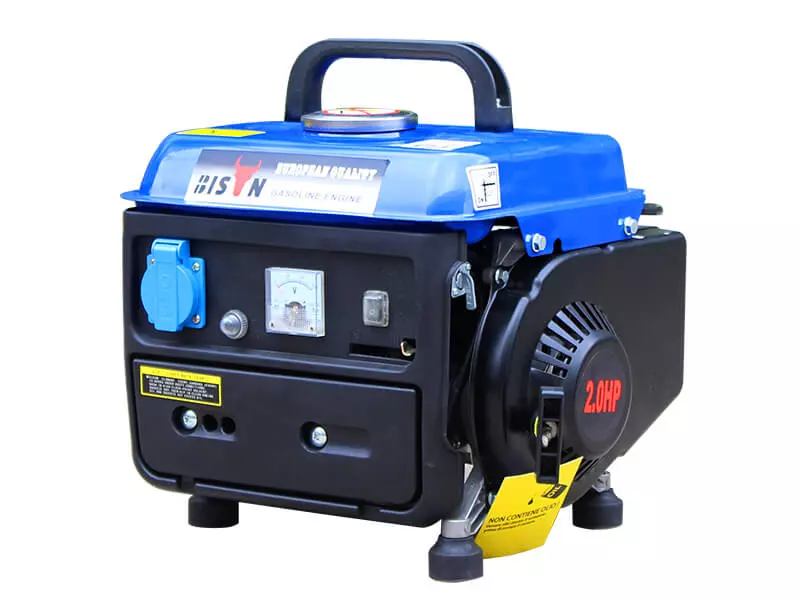
A gasoline generator uses unleaded gasoline as its fuel source. Inside the generator, the fuel is burned in a small internal combustion engine to create mechanical power, which is then converted into electricity. These generators are widely used because gasoline is easy to find almost anywhere, making them a convenient choice for campers who want quick and dependable access to power.
High energy density: gasoline provides more energy per unit than propane, allowing longer run times on less fuel.
Easy availability: readily found at almost any gas station, even in remote areas. In emergencies, fuel can even be siphoned from a vehicle's tank.
Lower upfront cost: gasoline generators are generally more affordable than propane models, making them budget-friendly for campers.
Compact fuel storage: gasoline can be carried in small, portable cans that are easier to transport than propane cylinders.
Shorter fuel shelf life: gasoline begins to degrade after a few months unless treated with stabilizers, though this is less of an issue for frequent users.
Higher emissions: produces more carbon buildup, requiring more frequent maintenance.
Louder operation: tends to generate more noise, which may disturb quiet campsites.
Higher storage risk: gasoline is highly flammable and requires careful, safe handling.
Gasoline generators are a practical choice for campers who value long-lasting power and easy fuel access. They're especially useful for trips where fuel availability may be uncertain or when reliable performance is needed without the bulk of propane tanks.
Propane generators are best if:
You camp for extended periods without resupply, since multiple tanks can be stored safely.
You store your generator for months between trips, as propane doesn't degrade like gasoline.
You prefer a cleaner option with lower emissions and reduced maintenance.
You already use propane for cooking, heating, or other gear, so one fuel covers everything.
You camp in noise-sensitive areas, since propane models are generally quieter.
Gasoline generators are best if:
You need maximum power for energy-hungry appliances such as air conditioners or large cooking equipment.
You camp near gas stations, making refueling quick and convenient.
You take short, frequent trips where gasoline's shorter shelf life isn't a concern.
You're on a tight budget, as gasoline generators usually cost less upfront.
You want emergency flexibility, since gasoline is widely available and can be siphoned from vehicles if necessary.
Propane usually costs a bit more per unit of energy than gasoline, but its stable pricing and long shelf life can reduce waste and lower maintenance costs over time.
Yes. Many models can be converted with a kit, but always check compatibility and consider professional installation for safety and efficiency.
Propane generators are typically quieter because they burn cleaner, though the difference is often small. Choosing a quality inverter generator will have the biggest impact on reducing noise.
Yes. Propane generally performs reliably in cold conditions. It only loses pressure in extreme cold below -44°F (-42°C), which is rare in camping situations.
Gasoline lasts about 3–6 months without stabilizers, or up to a year with them. Propane, when stored in sealed tanks, can be kept indefinitely without degrading.
Ultimately, the choice between a gasoline or propane generator comes down to personal preference and camping style. Propane offers clean fuel, easy storage, and low maintenance—ideal for extended trips and eco-conscious campers. Gasoline delivers more power and widespread availability, making it better for short trips or areas where fuel stations are plentiful. For added flexibility, a dual-fuel generator can give you the best of both worlds. Whatever option you choose, a reliable generator ensures your camping experience remains comfortable and well-powered.
At BISON, a professional generator manufacturer in China, we know that every camper's needs are unique. That's why we create generator solutions to match different lifestyles—whether you're heading off-grid, parking at a campsite, or spending a weekend under the stars. Take time to evaluate your power needs, compare fuel options, and choose the generator that will keep your next adventure running smoothly.
inquiry form here
BISON BLOG, All the latest news and views from Bison Machinery.
what's hot?
Related Articles
propane generator vs gasoline for camping: which is better how to secure a generator while campingRelated Products