12Jan 2026
table of contents
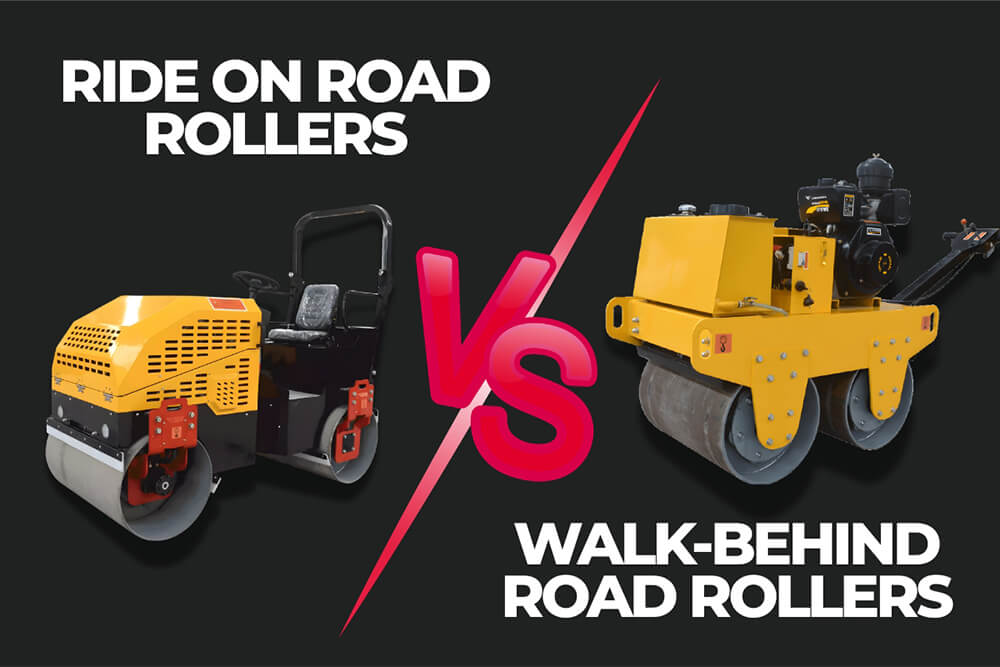
At BISON, we believe every strong road and sturdy foundation starts with proper compaction. Building on loose, uneven soil may seem fine at first, but over time, cracks and dips can form. Without compaction, the ground can shift, leading to subsidence and costly repairs. Compacting soil or base material increases density, removes air pockets, and creates a firm, stable surface that lasts.
That’s where the road roller comes in—a powerful machine designed to press and smooth materials like soil, asphalt, or gravel. It’s the unsung hero behind every smooth highway and solid foundation.
There are two main types of road rollers in construction: the ride-on road roller, for larger areas and heavy-duty work, and the walk-behind road roller, ideal for smaller spaces and precise control.
In this article, BISON explores ride-on vs. walk-behind road rollers, highlighting their features, benefits, limitations, and best use scenarios to help ensure optimal performance on every job site.
A road roller, also known as a roller compactor, is a heavy-duty construction machine used to compact materials such as soil, gravel, concrete, and asphalt. The primary purpose of a road roller is to increase the density of these materials by removing air pockets and reducing voids, thereby ensuring a solid, level base for roads and other infrastructure. Compaction increases the surface’s stability, load-bearing capacity, and durability, which are essential for long-lasting construction results.
A typical road roller consists of one or more large steel drums or rubber-tired wheels that apply static or vibrating pressure to the ground. Coming in a variety of sizes and configurations to meet different project needs. Smaller, more agile machines are better suited for compacting areas and repair work, while larger, more powerful rollers are used on highways and industrial sites.
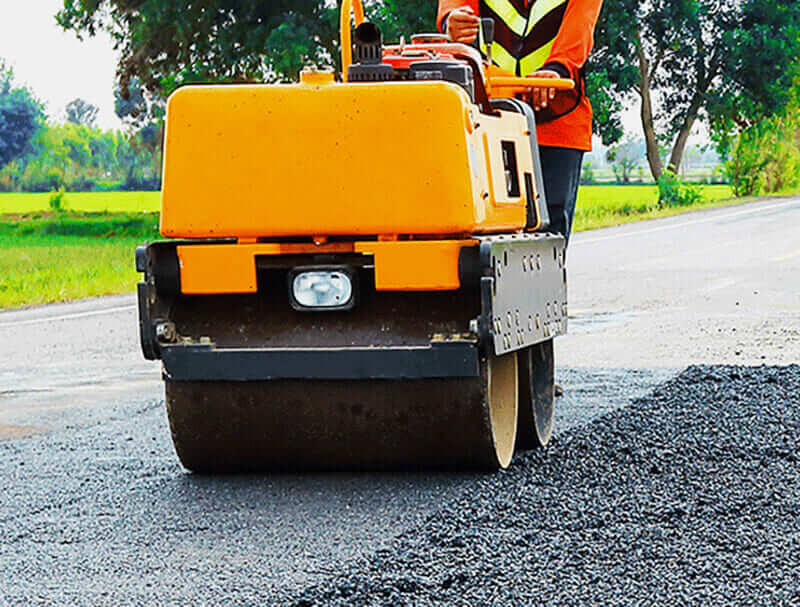
A walk-behind road roller is a compact, easy-to-use machine designed for small- to medium-sized compaction tasks. Unlike ride-on rollers, operators walk behind these machines, using a handle or control arm to steer and regulate speed. Walk-behind rollers are ideal for areas where space is limited or heavy machinery could damage the surface.
Compact design: fits into narrow or confined areas like sidewalks, driveways, trenches, and small parking lots. Lightweight construction allows easy maneuvering in spaces larger rollers cannot reach.
Single or double drum options: single drums are used for soil, while double drums are preferred for asphalt and smooth surfaces.
Vibration function: most models feature a vibration mechanism that increases compaction efficiency by settling material particles tightly.
Ease of transport: small size makes it easy to load onto trucks or trailers without heavy equipment.
User-friendly operation: simple controls allow operators with limited experience to adjust speed and vibration for optimal compaction depth and surface finish.
Cost-effective: more affordable than ride-on rollers, ideal for small contractors or minor projects.
High maneuverability: easily navigates corners, walls, and tight spaces for detailed work.
Low operating costs: uses less fuel and requires minimal maintenance.
Simple maintenance: fewer mechanical parts and smaller engines make servicing faster and cheaper.
Ideal for repair work: perfect for pothole patching, pavement repair, and narrow trench compaction.
Limited coverage area: smaller drums mean fewer square meters compacted per pass.
Low compaction force: lightweight design limits deep compaction on thick soil or asphalt layers.
Operator fatigue: walking behind the roller for long periods can be tiring.
Not for large projects: large roads or highways require heavy rollers to cover wide areas efficiently.
Sidewalks and pavements
Paths and driveways
Small parking areas
Trench and edge compaction
Asphalt patching and surface repair
Landscaping and base preparation
Compact, affordable, and easy to operate, walk-behind road rollers are a practical investment for contractors working on small or confined sites. Their balance of simplicity and performance makes them a versatile tool for construction and maintenance projects.
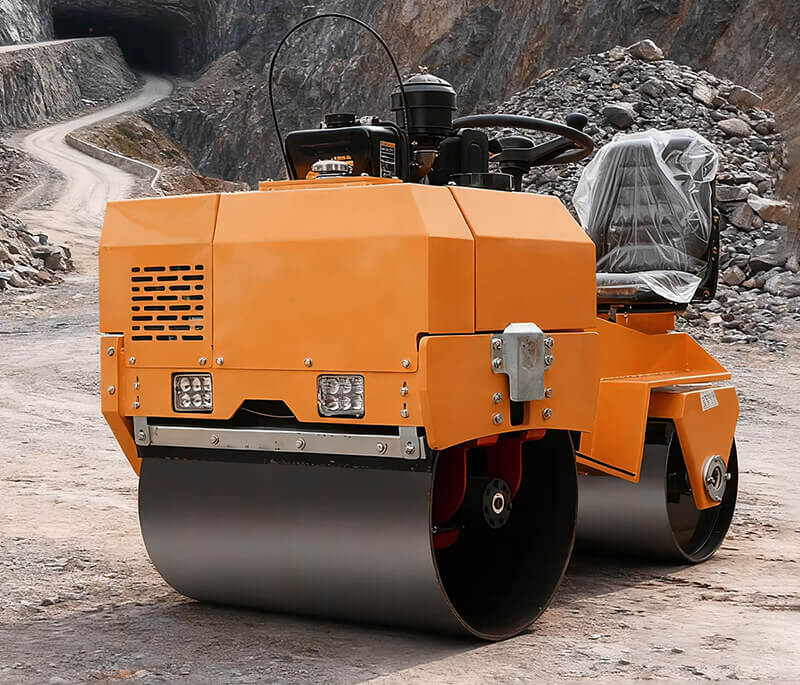
A ride-on road roller is a heavy-duty compaction machine that allows the operator to sit or stand while controlling its movement and functions. Designed for large-scale construction and paving projects, ride-on rollers deliver greater compaction force, higher productivity, and a smoother finish than walk-behind models. They are commonly used for roads, airport runways, parking lots, and industrial areas where uniform compaction and efficiency are critical.
Powerful engine: equipped with diesel engines that provide the necessary power for movement and vibration, ensuring consistent compaction even in tough soil or asphalt conditions.
Large drum or tire configuration: available as single-drum, double-drum (tandem), or pneumatic tire models. Single drums suit soil and rough terrain, double drums are ideal for asphalt, and pneumatic tires provide uniform pressure for finishing work.
Operator cabin or platform: enclosed cabins or open platforms with comfortable seating, intuitive controls, and performance monitoring instruments. Some models include air conditioning and ergonomic features to reduce fatigue.
Vibration and static modes: switch between static and vibration rolling to suit different materials. Vibration improves density, while static rolling fine-tunes the surface.
Water spray system: keeps the drum clean and prevents asphalt from sticking during operation.
Higher compaction efficiency: greater weight and larger drums achieve deeper, uniform compaction for roads and highways.
High productivity: covers large areas per pass, reducing labor and project time.
Operator comfort and safety: seated position, vibration-damping, and adjustable controls minimize fatigue.
Durability and longevity: built with high-strength materials to withstand continuous heavy-duty use.
Versatility: handles subbase preparation, asphalt finishing, and a wide range of compaction tasks.
High cost: significant initial investment and maintenance expenses.
Limited access in tight spaces: large size and turning radius make them unsuitable for confined areas.
Transportation requirements: specialized equipment may be needed to move them between sites.
High fuel consumption: powerful engines consume more fuel, raising operating costs.
Highways and main roads
Large parking lots and industrial yards
Airport runways and taxiways
Dams, embankments, and extensive earthworks
Large asphalt or subbase compaction projects
Ride-on road rollers are built for performance, power, and endurance. Their combination of high compaction force, operator comfort, and wide coverage ensures efficient, reliable results for large-scale construction projects.
Although both ride-on and walk-behind road rollers are designed for compaction, they differ significantly in size, power, performance, and use. Understanding these differences helps construction professionals select the right machine for each project.
Ride-on rollers are much larger and heavier, ranging from several tons to tens of tons, enabling deeper and more uniform compaction. Walk-behind rollers are compact and lightweight, usually between 500 kg and 1 ton, making them easier to maneuver but limiting compaction depth.
Ride-on rollers feature a seated position with advanced control panels, providing comfort and better visibility over large areas. Walk-behind rollers require the operator to walk behind the machine and guide it with a handle, which can be physically demanding.
Ride-on rollers deliver high compaction force, suitable for thick soil and asphalt layers. Walk-behind rollers are best for leveling smaller surfaces but cannot match the depth or coverage of ride-on models.
Ride-on rollers cover larger areas per pass, reducing labor and project time. Walk-behind rollers operate slower and are ideal for finishing or touch-up tasks rather than full-scale projects.
Walk-behind rollers excel in tight spaces, around edges, and near obstacles. Ride-on rollers perform better in open, broad work areas but are less suited for confined spaces.
Walk-behind rollers are more economical to purchase and maintain, with lower fuel consumption. Ride-on rollers require higher initial investment and maintenance but deliver greater productivity on large projects.
Ride-on rollers are designed for comfort, featuring cushioned seats, vibration damping, and ergonomic controls. Walk-behind rollers demand more physical effort, which can lead to fatigue during extended use.
Ride-on rollers are ideal for large-scale projects like highways, airport runways, and industrial sites. Walk-behind rollers are suited for smaller tasks such as sidewalks, driveways, and repair work.
Walk-behind rollers are easy to transport on small trucks or trailers. Ride-on rollers often require specialized vehicles due to their size and weight, increasing logistics costs.
Ride-on rollers produce smooth, consistent surfaces suitable for asphalt and road construction. Walk-behind rollers achieve good results on small areas but may not deliver uniform smoothness on larger surfaces.
Choosing the right type
Selecting the right road roller is crucial for efficiency, quality, and cost. Consider your project’s scale, budget, and frequency of use to choose the machine that provides the best balance of power, efficiency, and practicality.
As a professional road roller manufacturer in China, BISON understands that both ride-on and walk-behind rollers have unique strengths and ideal applications.
The choice depends on the scale and nature of your project. Walk-behind rollers are perfect for small or confined areas, offering easy handling and cost-effectiveness, while ride-on rollers deliver superior compaction and performance for large-scale construction. Regardless of type, proper maintenance and safe operation are essential for long-lasting performance and reliable results.
Evaluate your project requirements carefully and consult an expert to select the roller that best meets your compaction needs. At BISON, we offer high-quality, dependable road rollers designed to handle a wide range of construction tasks. Contact us today to find the perfect roller for your next project.
inquiry form here
BISON BLOG, All the latest news and views from Bison Machinery.
what's hot?
Related Articles
Everything you need to know about plate compactor Open Frame vs Closed Frame Generators: What's the Difference? Generator Backfires Trowel machines: Introduction, types, working mechanism and buying guide why is my generator draining oilRelated Products